Sourced fact
The News
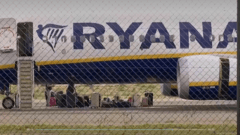
BBC News reported that seven passenger flights across Europe, including two from the United Kingdom, underwent inspections following a series of perceived bomb threats. Sweeps for explosives were conducted on two Ryanair aircraft—one departing Dublin and the other Lisbon—after they landed in Rome based on anonymous reports, with no explosive materials found. Other planes in Poland, Spain, and Bulgaria also underwent comprehensive security checks, while authorities from multiple countries collaborated to assess whether these incidents constituted a coordinated attack aimed at disrupting airspace.
The UK government described today's events as "malicious false alarms," confirming it possesses a robust aviation security system that effectively handles such threats. Aviation security expert Paul Mason noted that plane bomb threats are not frequent occurrences, making these incidents unusual; he considered the nature of threats targeting a wide range of airlines to indicate deliberate action rather than random malicious calls.
In Rome, bomb squad experts at Fiumicino Airport executed standard security protocols to ensure passenger and crew safety after confirming no explosives were present on the aircraft, luggage, or among passengers. In Spain, local authorities confirmed that a Ryanair flight from Manchester landing in Murcia was entirely free of explosives; one passenger stated he was not informed of the threat until after landing, when the plane was evacuated immediately upon arrival of fire trucks and bomb disposal units.
Two flights bound for Warsaw were also affected: a British Heathrow flight was diverted to the smaller Moldlin Airport temporarily, while a Scandinavian Airlines flight from Copenhagen landed in Warsaw as planned. In Bulgaria, Transport Minister Georgi Biev clarified that two flights bound for the capital Sofia faced bomb threats, but no explosives were found during security team inspections.
Separately, a bomb alert in Greece led to the evacuation of 1,537 passengers and crew from a cruise ship bound for Israel after an initial inspection found no explosives on board the Panama-flagged vessel, which is currently anchored at Siro Island port. These aviation incidents today follow yesterday's emergency landing of a Wizz Air flight in Budapest after a bomb threat later verified as false.
Former expert Marco Chan clarified that a bomb threat is considered real until resolved, requiring crew to silently search areas like bathrooms and kitchens without touching anything suspicious except in extreme necessity. Captain Terry Toyes noted that captains evaluate multiple factors when deciding on diversion, including available airport facilities and how the flight continues if the threat proves false; planes are typically moved to isolated locations for passenger evacuation and inspection by police and bomb disposal teams.
Analysis & context
Analysis & Context
Analytically, the synchronization of these incidents across several European countries raises questions about coordination among actors behind the threats. Although no official link exists between them, international cooperation in assessing threats suggests a methodical attempt to disrupt European aviation security systems.
In the broader context, the global aviation industry relies on strict protocols for handling bomb threats, including aircraft evacuation and thorough inspection before resuming operations. Expert reports indicate that most such threats are false, but managing them requires precise precautionary measures to ensure passenger and crew safety.
The impact of these incidents extends beyond security aspects, reaching economic and psychological dimensions for passengers and airlines. This has led to increased operational costs and temporary loss of confidence in aviation security systems in some regions.
Finally, the importance of experts and consultants in assessing threat credibility and making rapid decisions to protect airspace is highlighted. These incidents serve as a reminder of the need for continuous preparedness to handle any potential threat in a world characterized by complexity and rapid change.