Sourced fact
The News
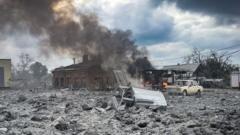
The United States launched limited and defensive military strikes against Iran's Qeshm Island in the Strait of Hormuz in response to the Islamic Revolutionary Guard Corps firing at a US aircraft, amidst mediation efforts to prevent a full-scale war following the US midterm elections. US officials told CBS that the attacks, described as defensive, were a response to a prior Iranian attack, while Iran's IRNA agency reported explosions on the island on Monday; the Revolutionary Guard did not comment directly but confirmed it had shot down two American drones.
President Donald Trump stated there is an "accelerating clock" for strikes on Iran, asserting that the US might need to target the "Paksak" nuclear site linked to Iran's program within an hour, though he later denied the possibility of resuming large-scale strikes after the elections amid pressure from his Republican party to end the war that began in February. Trump noted that Iran lacks money and gasoline and that its people are suffering stress, while Israeli Prime Minister Benjamin Netanyahu urged him via phone call to continue the wave of strikes after voting ended in the US.
On the diplomatic front, Qatar's Ministry of Foreign Affairs spokesperson Majed Al-Ansari expressed his country's optimism about reaching an agreement between both sides, emphasizing that both parties are committed to negotiations and exchanging proposals through Qatari and Pakistani mediation. Iranian Shura Council Chairman Mohammad Baqer Qalibaf also called on the US to stop the war again, stating that the Islamic Republic is ready to fight but has offered a strong and rational response, while Foreign Minister Abbas Araghchi confirmed ongoing intensive talks via intermediaries to end the conflict.
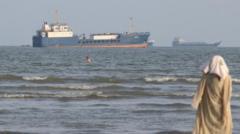
It should be noted that the Strait of Hormuz, through which one-fifth of global oil and gas shipments pass, has been effectively closed since the start of the war due to Iranian missile and drone attacks and US naval blockades. The US and Iran reached a preliminary agreement in June to reopen the waterway, but it collapsed after Iran resumed attacking ships and the US reinstated the blockade, prompting Tehran to insist on retaining some control over the passage and using a southern route via Omani waters.
Analysis & context
Analysis & Context
From an analytical perspective, these escalations emerge in a highly sensitive context marked by increasing tension between Washington and Tehran, as the US attempts to manage the war selectively while Iran seeks to maintain its sovereignty over the vital Strait of Hormuz, through which one-fifth of global oil supplies flows.
In the broader context, reports indicate that international mediation plays a pivotal role currently, with Qatar and Pakistan acting as primary communication channels between the two sides to renew negotiations for a ceasefire and reopen the maritime corridor closed by Iranian missile and drone attacks on commercial vessels.
Moreover, the US election timing adds another layer of complexity, as President Trump faces pressure from his Republican party and declining polling numbers to end the war, making his military and political decisions more volatile and affecting the trajectory of the regional conflict.
Finally, the issue of reopening the Strait of Hormuz and its conditions remains a central diplomatic discussion point, with Iran insisting on not ceding any level of control over the maritime passage, while the US continues to protect oil tankers to ensure Gulf states' exports continue despite ongoing tensions.