Sourced fact
The News
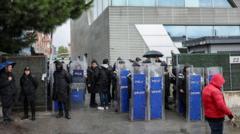
Turkish authorities halted the live broadcast of news channel Halk TV after raiding its headquarters, leading to the arrest of 11 individuals and the appointment of a new administrator for the channel. This move comes in the context of a broad campaign against independent media that criticizes the Turkish government. According to Turkish media reports, the channel's owner, Kafer Mahir Oglu, was charged with bribery, tender rigging, and money laundering.
Mahir Oglu, who was not in Turkey during the raid, stated that seven members of his family were arrested. In a video message on social media, he said: "This is a dark day for Turkey, where the right to information is being stripped for political reasons."
The Istanbul Bar Association condemned this move, especially in light of the opposition leader, Ekrem Imamoglu, turning to the courts to defend corruption charges. The former leader of the Republican People's Party, Muharrem Ince, described this step as "weak and cowardly," noting that such early morning raids on TV stations indicate the behavior of autocrats.
In a broader context, Turkey faces sharp criticism from Reporters Without Borders, which noted that 90% of national media are under government control. The organization also pointed out that more than 90% of national media are subject to government censorship, and independent news bulletins face unjustified accusations. In September, a court ordered the blocking of the social media site of TV channel T24, while in October 2025, a new administrator was appointed for TV1, leading to the complete neutralization of its opposition stance.
Analysis & context
Analysis & Context
Analytically, this operation is part of a series of pressures exerted by the Turkish government on independent media. These measures aim to restrict freedom of expression and suppress political criticism. Reporters Without Borders noted that Turkey ranks 163 out of 180 countries in the World Press Freedom Index for 2026, reflecting severe constraints on independent media in the country, where the government controls most national media outlets.
In a broader context, this step is part of a wider campaign targeting opposition political leaders and independent media. It follows similar campaigns against media and opposition political figures, indicating increasing political tensions in the country.