Sourced fact
The News
A severe storm named "Nor'Easter" caused airspace closures and canceled hundreds of flights across the eastern United States on Saturday, leading to power outages for thousands of homes in New York, Boston, and Philadelphia. These storms are known as large low-pressure systems that typically form off the East Coast of the United States and are accompanied by strong winds and heavy rain or snow, depending on the season.
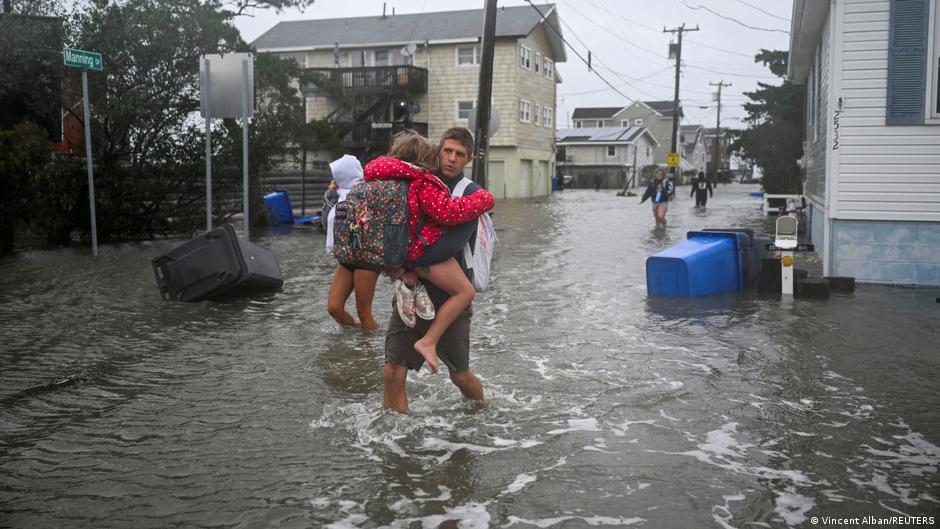
The National Weather Service warned of major coastal flooding along the Atlantic coastline in the mid-Atlantic states during high tide periods expected to continue throughout the weekend. The agency emphasized the urgent need to prepare for surging water into low-lying areas near the shore, which will lead to road flooding and negatively impact homes and businesses in those regions.
Data from PowerOutage.us indicated that approximately 95,000 people in New York, New Jersey, Connecticut, Massachusetts, Rhode Island, and Pennsylvania were facing power outages by 3 PM on Saturday. New York Governor Kathy Hochul stated that the weather conditions are extremely dangerous, noting in a press release that anyone going to or near water this week is risking their life.
New York City Mayor Eric Adams also warned residents about strong winds and urged them not to travel unless absolutely necessary. Airlines such as JetBlue United and American informed passengers of alerts allowing them to change their flights without additional fees due to difficult weather conditions.
Organizers of the "Great American Bash" event in midtown New York stated that safety must come first, explaining that this is the first time in 14 years such an event has been canceled, which was expected to feature numerous celebrities. Many flights were canceled along with major cultural music festivals in New York, Maryland, and Boston due to the severe weather conditions caused by the storm.
Analysis & context
Analysis & Context
Analytically, Nor'easter storms represent a unique climatic phenomenon in the western Atlantic Ocean, typically forming off the East Coast of the United States. They do not occur year-round but are more frequent between autumn and early spring. These storms are characterized by carrying massive amounts of rain or snow along with strong winds, making them one of the most dangerous weather phenomena in the region and directly impacting transportation and energy infrastructure.
In a broader context, data indicates that this week's storm had an exceptional character, with authorities expecting rainfall equivalent to more than a full month's worth in areas like Massachusetts and Boston, reflecting the increasing severity of extreme weather events facing the region. The occurrence of this storm coincided with high tides, which increased the risk of coastal flooding—a scenario requiring an urgent response from local authorities to evacuate low-lying areas and protect residents.
The impact of the storm is also clearly visible in the tourism and entertainment sectors, where major music festivals scheduled in midtown New York and near Boston were canceled, highlighting the fragility of outdoor events in the face of harsh weather conditions. Officials' statements confirm that safety is the top priority, especially given the recurrence of drowning incidents and landslides that such severe storms can cause in low-lying coastal areas.