Sourced fact
The News
Survivors of a tragic landslide that occurred in eastern Uganda in 2019 have brought their case to the United Nations, demanding relocation and compensation after accusing the government of violating the constitution through negligence in disaster management measures in the mountainous Budadiri region prone to landslides. This issue arises at a time when heavy rains are increasing the risk of such disasters recurring, as survivors insist that the current government relocation program ignores their safety, land rights, and livelihoods. Reports indicate that the UN Human Rights Committee is considering what is believed to be the first case requesting climate adaptation measures—a move that could precede a new global race.
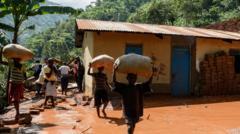
Forty-eight affected individuals complain of the government's failure to implement effective disaster prevention laws in an area that has seen renewed fears for years, with every rainstorm recalling last year's disaster that claimed more than 50 lives, including at least 33 children. William Tshama, one of the plaintiffs who lost four family members in the incident, stated: "My pursuit must be a lesson," clarifying that victims of such cases whom governments ignore can resort to courts to force them to assist their citizens. Survivors also noted that the new program launched by the government last month, offering 18 million Ugandan shillings to affected families, is insufficient to cover relocation and rebuilding costs, especially with limited options between receiving land and building a home versus accepting financial compensation.
Families living in high-risk areas face a two-month deadline from November to December to relocate voluntarily or face forced eviction, while plaintiffs emphasize that the threat extends beyond landslides to include changes in rainfall patterns and soil degradation that have negatively impacted agriculture and livelihoods. Samantha Atukunda Kakuru Museiga, Executive Director of Greenwatch supporting the case, said: "It is about changing how governments prepare for and respond to climate-related disasters so that losses and damages are not merely a secondary thought in disaster management." Vistilina Newman, a lawyer at ClientEarth, added that disasters like those in Budadiri are exacerbated by climate change and are occurring worldwide, noting that poor countries that contributed little to global emissions bear the heaviest consequences and need greater financial support.
Survivors demand that the relocation process include more than just moving people out of hazard zones, with the necessity of protecting their livelihoods, respecting their land rights, and taking into account the individual needs of each family. The UN Human Rights Committee will ask the Ugandan government to respond to the lawsuit within six months, while survivors continue to emphasize that justice lies not only in winning court cases but in forcing government policies to keep pace with changing climate conditions. Risks are escalating in East Africa, where floods and landslides claimed 181 lives in Kenya between March and May 2024, and 135 lives in Rwanda in May 2023, plus a disaster in Nepal in October 2026 that killed more than 1,500 people.
Analysis & context
Analysis & Context
From an analytical perspective, this case represents a potential legal precedent in the field of climate adaptation, as it is being addressed by the Human Rights Committee for the first time as a lawsuit aimed at enforcing global adaptation measures. Experts believe that transforming climate disasters from mere natural incidents into international legal issues could change how governments approach emergency preparedness and response policies for environmental crises.
In the broader context, climate-related disaster risks are not limited to Uganda alone but extend across East Africa and the entire world, where Kenya, Rwanda, and Nepal have recently witnessed waves of floods and landslides killing hundreds of thousands in recent months. Reports indicate that poor countries that contributed little to global emissions bear heavy burdens due to climate change, necessitating direct financial support from wealthy nations to implement effective rescue measures.
This analysis also highlights the gap between current government plans and the real needs of survivors, noting that merely relocating populations is insufficient; land rights and livelihoods must be guaranteed to ensure their sustainability after the disaster. Organizations like Greenwatch confirm that achieving justice is not just about winning in court but about forcing government policies to keep pace with rapid climate changes.