Sourced fact
The News
The United States has officially lost its measles-free status after more than two decades, following the recording of record-high infection and death numbers over two consecutive years. The Pan American Health Organization (PAHO), a UN agency, announced that the virus has spread continuously in the country for over 12 months, leading to the revocation of this designation it had held since successful vaccination campaigns.
According to the organization, Mexico and Bolivia also lost their measles-free status. Garbas Barbosa, the director, attributed the renewed outbreak in the region to persistent gaps in vaccination programs. These figures serve as a serious warning for the Americas region, especially given that the number of cases in the United States reached 5,400 this year alone, with 10 deaths recorded—the highest since the 1990s.
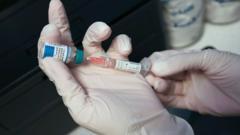
During a press conference on Tuesday, Barbosa stated that measles is resurging globally amidst these vaccination gaps, while Executive Director for Vaccines Daniel Sala noted that countries losing their status will be required to submit corrective plans to improve vaccination rates. This announcement coincided with efforts by the Centers for Disease Control and Prevention (CDC) to restore the status through expanding access to vaccines and combating the outbreak.
Part of the decline in vaccination rates is attributed to policies under the U.S. Department of Health led by Secretary Robert F. Kennedy Jr., who questioned the safety of the measles, mumps, and rubella (MMR) vaccine and attempted to change medical recommendations. President Donald Trump also played a role in this decline through his skepticism about vaccine safety and issuing an executive order to split the vaccine into three separate shots, creating confusion among the public and public health experts.
Dr. Erica Schwartz, CDC Director, clarified that the official label does not protect Americans as much as actual vaccination does, pointing to an investment of $100 million in local health offices to reach affected communities. Meanwhile, the triple vaccine coverage rate in the United States dropped to 92.4%, below the herd immunity threshold of 95% needed to protect vulnerable groups such as newborns who cannot be vaccinated.
The epidemic is currently witnessing a major outbreak in Pennsylvania, affecting over 1,400 people and killing seven, while controversy arose between state officials and the CDC regarding how deaths were counted. Experts believe that misinformation spread since the COVID-19 pandemic, encouraged by high-ranking officials, has weakened trust in health systems and led to a sharp decline in vaccine acceptance over the past decades.
Analysis & context
Analysis & Context
From an analytical perspective, the United States losing its eradication status represents a significant step backward in public health, especially as this country was the first in the Americas to achieve this milestone thanks to intensive vaccination campaigns. A large part of the decline in vaccination rates is attributed to eroded trust between patients and health systems since the COVID-19 pandemic, where patients faced misinformation regarding vaccine safety.
In the broader context, political factors play a pivotal role in the current vaccination crisis, as U.S. Health Secretary Robert F. Kennedy Jr. attempted radical changes to vaccine policies and echoed doubts about MMR vaccine safety. Moreover, President Donald Trump's statements questioning vaccine safety and ordering its split into three doses negatively impacted public trust, leading medical experts to describe these measures as costly and confusing.
The analysis indicates that gaps in vaccination programs are not merely a medical issue but a complex socio-political one, where public opinion polarization and the impact of misinformation have narrowed the safe margin for infection. Additionally, losing eradication status in multiple countries such as the United Kingdom, Spain, and Austria highlights the global nature of this crisis, requiring international cooperation to stop the virus's spread.
Finally, the importance of the roles played by both public and private sectors in bridging gaps caused by political fluctuations is highlighted, where states and local governments provide their own recommendations to maintain medical practices followed for decades. Restoring trust between the public and the health system is considered a crucial step toward achieving global health goals related to measles.