Sourced fact
The News
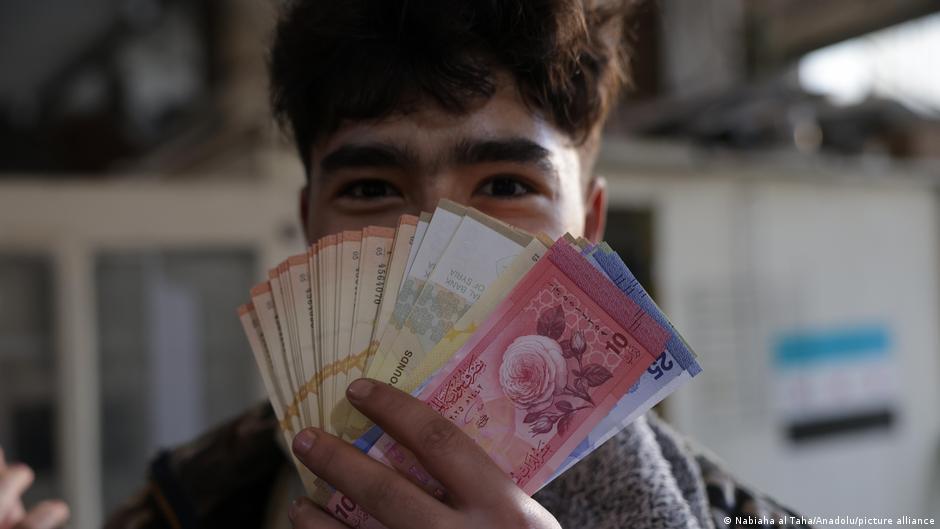
Significant increases in fuel prices imposed by the Syrian government in mid-September sparked widespread protests since the ousting of the Assad regime at the end of 2024. Diesel prices rose by 40%, while taxi drivers struggled to meet their basic needs.
Kanan Abdullah, a driver who has worked in Damascus for 12 years, stated that only a very small amount remains after paying for fuel, leaving him unable to buy food or afford car repair costs. Kamar Kasoum, a mother of three children, added that transportation costs represent half the salary of many people, causing them to worry about getting to work and returning home.
The Syrian Center for Political Research noted in its latest report that consumer prices rose by approximately 25% between July 2025 and July 2026, with increases reaching up to 37% in essential expenditures such as housing, water, electricity, and gas.
Alaa Sindiyan, an architect based in Damascus, explained that there is no logical relationship between individual income and the prices citizens pay, emphasizing that people feel prices have become extremely high and unaffordable. Kamar Kasoum also stated that protests did not appear out of nowhere but reached a point where citizens could barely prioritize anything beyond food and water.
In contrast, reports speak of international investments amounting to billions of dollars, with Syrian President Ahmad Al-Sharaa expecting the Syrian economy to reach $50 billion this year compared to $20 billion in 2024. However, the United Nations indicates that more than two-thirds of Syrians still live in poverty relative to others, while new projects focus on wealthy segments through gated residential complexes.
Sindiyan noted it is difficult to determine who benefits from economic development because announced projects do not reflect their impact on reality and appear directed solely toward the wealthy class, expressing a desire for greater government transparency regarding its plans. Some entities also criticized neo-liberal policies, arguing they would exacerbate social problems and resemble what led to the Syrian Revolution in 2011.
Sam Hiler, an analyst at the Center for International Studies in New York, explained that new leaders implemented a shock economic program without considering the weakness of most Syrians. Meanwhile, Joseph Daher, an expert on Syrian political economy, argued that success should not be measured solely by financial relief but by the fiscal policy's ability to rebuild citizenship, justice, and public trust.
Analysis & context
Analysis & Context
From an analytical perspective, there appears to be a deep gap between the positive economic narratives promoted by the government and the lived reality of Syrian citizens. While reports speak of billions in investments and expectations that the economy will reach $50 billion this year, more than two-thirds of the population still lives in relative poverty according to the UN.
In the broader context, analyses suggest that privatization and economic liberalization policies adopted by the government may entrench new forms of privilege serving only the wealthy class. The Syrian Think Tank "Itana" has criticized these trends, warning they could exacerbate social problems similar to those that ignited the Arab Spring in 2011.
Additionally, a Republic newspaper report on major real estate projects fuels rumors that they target only the wealthy class, while the country suffers from a severe housing crisis. Researcher Joseph Daher argues that the success of post-conflict states should not be measured by financial relief alone but by their ability to rebuild trust, institutions, and social justice.
Finally, opinion polls conducted by the magazine "Syria in Decline" indicate eroding public patience, with 66% of respondents believing government efforts are insufficient to address rising energy and food prices, threatening the country's socio-economic stability.