Sourced fact
The News
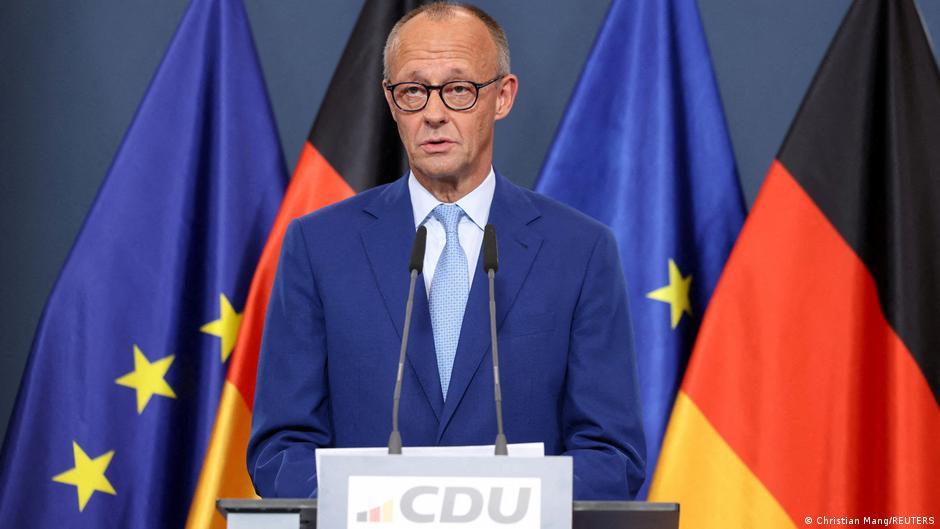
Friedrich Merz's future as German Chancellor faces sharp political challenges after the Christian Democratic Union (CDU) lost its seat in the Mecklenburg-Vorpommern state parliament for the first time since World War II. This historic defeat led to the resignation of the party's state chairman, Daniel Peters, who announced personal consequences for the crushing loss suffered by the Christian Democratic Union.
In a statement issued Monday evening, Peters clarified that he is withdrawing from the leadership role following the stunning loss in the state, while Philipp Amthor was temporarily appointed to lead the state party after other members of the steering committee resigned. This change comes amid the Alternative for Germany (AfD) party's dominance, which has become the strongest force in the state, narrowly edging out the Social Democratic Party (SPD), Merz's secondary partner in the federal government.
On his part, AfD chairman Liv Erik Holm stated that his party does not expect to join the government despite topping the results, noting that other parties rejected coalition offers and are preparing for a strong opposition role. Holm added that the only coalition capable of achieving a majority now would require merging all three left-wing parties, who hold 39 seats compared to AfD's 32 seats.
Former Chancellor Angela Merkel called on the Christian Democratic Union to build bridges and return to its roots as a people's party, citing lessons learned from Konrad Adenauer after the war. Merkel said history has shown that it is important for a candidate to be inclusive and speak to everyone while upholding specific values, urging continued bridge-building policies among different segments of society.
Meanwhile, the Social Democratic Party issued an urgent written resolution shifting its focus to issues of living costs and inflation following recent elections. The resolution emphasized the necessity of not burdening employees and individuals with low incomes with the weight of reforms, calling for fair changes that bring real improvements for citizens while maintaining the party's role in the federal government.
Analysis & context
Analysis & Context
From an analytical perspective, these results indicate a fundamental shift in Germany's political landscape where traditional parties are losing their dominance to far-right and progressive left forces. The defeat of Merz's party in its first eastern German state serves as an indicator of the weakening appeal of the current governing coalition amid growing economic and social concerns among voters.
In the broader context, the rise of the Alternative for Germany party represents a significant challenge to political stability in Germany, as the party refuses to join any government and declares its intention to play a strong opposition role. This stance complicates the process of forming local governments and intensifies political tensions within the German parliament.
Moreover, Angela Merkel's call to return to her party's roots and adopt an inclusive approach reflects an attempt to repair the party's image after a series of electoral defeats. However, the greatest challenge lies in how traditional parties can unite their ranks to confront the rise of extreme forces without compromising their fundamental principles.
Finally, the amendment of the voting law in Berlin to include the 16-17 age group stands as evidence of evolving political awareness among youth and its impact on future election results. This change may alter the dynamics of Germany's political arena and affect the future of traditional parties.