Sourced fact
The News
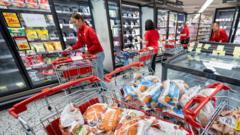
European Union officials have warned of a deliberate attempt to disrupt the food supply chain following a wave of cyberattacks targeting supermarket chains in more than ten European countries on Monday. The significant rise in temperatures inside affected refrigeration units, which reached up to 50 degrees Celsius in some cases, forced retailers to discard large quantities of food. No party has admitted responsibility for these attacks so far, but the EU is examining them with increasing seriousness, particularly after a similar incident occurred three weeks ago in France that caused losses amounting to millions of euros.
The affected countries included Belgium, Estonia, Finland, Ireland, Italy, Luxembourg, the Netherlands, Portugal, Germany, and Sweden, where retail chains reported failures in their cooling systems. Thomas Renié, spokesperson for the European Commission, stated that these incidents are not isolated and that cyberattacks can disrupt essential services and impact citizens' daily lives. Christophe Hansen, the EU Commissioner for Agriculture and Food, also warned of further disturbances in the future, emphasizing that the bloc is dealing with the issue with utmost seriousness.
In Italy, Prime Minister Giorgia Meloni called for a meeting with intelligence leaders after some stores in Sicily and Tuscany were affected due to outdated security systems that were not sufficiently protected. Meanwhile, Belgian authorities announced a criminal investigation into the severity of the impact on dozens of outlets; the manager of a Delhaize store expressed shock at the food waste and said the situation was so painful he considered quitting his job. In Ireland, Musgrave Group, which owns the SuperValu chain, confirmed that restocking frozen and chilled sections in affected stores is proceeding successfully.
Small stores in the Netherlands were also affected, while Sweden's ICA reported limited cooling issues without officially confirming a cyberattack. In Germany, Rewe Parken store systems resumed operations late Monday afternoon. In Portugal, the Auchan Group linked the attacks to seven Intermarché stores with an external service provider responsible for managing the refrigeration systems. Swedish cybersecurity agencies monitored the incident but did not identify its source. The UK's National Cyber Security Centre advised retailers to update their fridge control software in anticipation of AI-driven attacks expected within two years.
Analysis & context
Analysis & Context
From an analytical perspective, these attacks highlight the fragility of critical infrastructure that relies on internet-connected technologies. In many cases, the attacks targeted external service providers responsible for managing refrigeration systems rather than the stores themselves. This pattern illustrates how a cyberattack can be directed at an external vulnerability to cause widespread damage across a complex network of commercial entities.
In a broader context, reports from the UK's National Cyber Security Agency indicate a possibility of an AI-supported cyberattack on national critical infrastructure within two years, adding a new layer of concern regarding the evolution of future attack methods. These expectations underscore the urgent need to update fridge temperature control software and adopt stronger authentication mechanisms to protect systems from exploitation.
The European Union emerges as a key coordinating body in addressing these challenges, bringing together member states to raise security awareness and share information about emerging threats. The European Commission's response, which included official warnings and appeals to enhance collective resilience, reflects a deep understanding that cybersecurity has become an integral part of food security and social stability.
Finally, the importance of international cooperation in cybersecurity is highlighted to counter attacks that cross national borders and target vital sectors such as food and energy. This incident serves as an important lesson for European countries to strengthen their cyber defenses and protect supply chains from any future sabotage attempts.