Sourced fact
The News
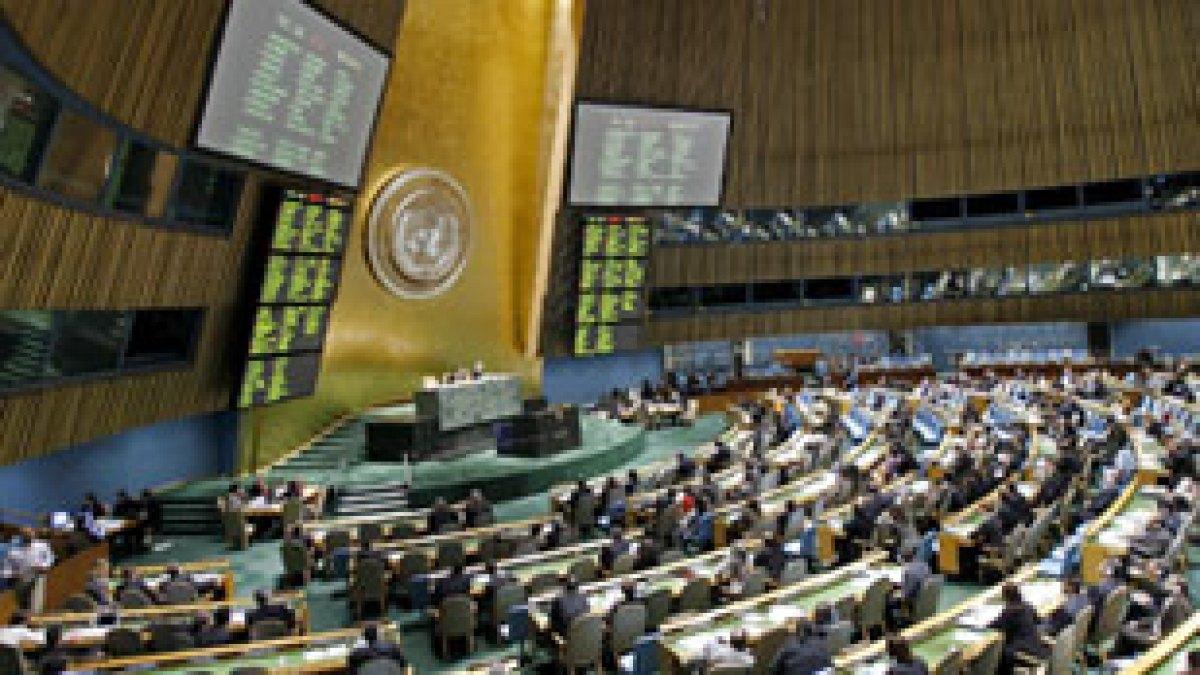
The United Nations General Assembly voted on Wednesday during its regular session to issue a new condemnation of the US economic embargo imposed on Cuba, despite Washington's intensive efforts to isolate the island internationally and win votes from biased countries. The resolution was supported by 130 states, including major economies such as Germany and South Korea, while 17 states opposed it, including the United States and Israel, and 25 other states abstained from voting.
Following the vote, Cuban Foreign Minister Bernardo Rodríguez stated via social media platforms that the United States is "isolated once again in its attempt to strangle the Cuban people," emphasizing that facts will not be affected by any pressure or media campaigns. He added that this embargo, which has lasted for more than six decades, directly contributes to the deterioration of living conditions on the Caribbean island.
The debate session at the General Assembly witnessed a sharp diplomatic escalation leading to a verbal and physical altercation between representatives of both countries. US officials blamed the Cuban side for attempting to isolate them, while Cuba responded with threats to impose counter-sanctions. US officials accused Cuba of trying to terrorize other states through threats to impose tariffs and visa restrictions on those who condemn the embargo.
Regarding field tensions, the US Ambassador to the United Nations, Mike Waltz, announced the expulsion of Richard Tor del Concepción, the first secretary of the Cuban mission, on charges of assaulting a US diplomat during the verbal and physical confrontation that took place on Tuesday.
Analysis & context
Analysis & Context
From an analytical perspective, this General Assembly decision represents a continuation of a long-term political campaign aimed at undermining the legitimacy of the US embargo by affirming that unilateral sanctions do not enjoy widespread global acceptance. These annual votes for over three decades have served as a key diplomatic tool used by Cuba and many developing nations to highlight what they term "economic colonialism" imposed by Washington.
In the broader context, the increasing number of states abstaining from voting or changing their position suggests that US pressure is beginning to affect some European and Asian governments that previously supported the resolution. However, the failure of the US administration to break the consensus also reflects the limited effectiveness of sanctions as an instrument of foreign policy in the face of today's interconnected global economy.
This diplomatic conflict highlights the ongoing tensions between Washington and Havana over decades, where economic disagreements have evolved into open diplomatic confrontations on international platforms such as the General Assembly. The adversarial rhetoric between both parties has transformed the debate from purely economic issues into a values-based struggle over the right to economic self-determination for nations.
Finally, the expulsion of the Cuban diplomat represents a new escalation in bilateral relations that may further exacerbate the permanent stalemate between the two countries and reduce opportunities for any future dialogue, even if political or economic conditions change dramatically.