Sourced fact
The News
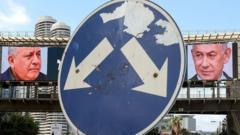
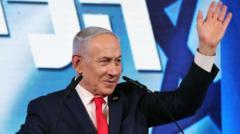
Preliminary results of the general elections in Israel, published by BBC News, show that Prime Minister Benjamin Netanyahu is ahead of his main rival, former army chief Gadi Eisenkot, but he still lacks the majority required in parliament. According to BBC News, results from 85% of counted votes indicate that the Likud party and its right-wing extremist allies and hardline religious parties will secure about 53 seats out of 120 in the Knesset.
On the other hand, Eisenkot's bloc, which includes the "Yasar" party plus three other Jewish opposition parties, is expected to win approximately 48 seats. Both leaders have stated they will strive to form a governing coalition, while results suggest that leading Arab parties may achieve an unprecedented leap with 19 seats, making them potential swing players in the political balance despite most Jewish parties pledging not to work with them.
State President Isaac Herzog said the turnout of 77.7% is the highest in over two decades, calling it a "badge of honor" for Israeli society. Herzog added that he expects official results next week to begin consultations with all political factions and avoid new elections if possible.
In contrast, Netanyahu declared that his right-wing bloc achieved a "large majority," while Eisenkot confirmed that the public is speaking in favor of change after exit polls showing close numbers between the two blocs. Meanwhile, the leader of the left-wing Democratic Party called for ending fear and discrimination to create a change government in partnership with Arab parties, while the head of the United Arab List expressed readiness to topple the current government through a real Jewish-Arab partnership.
Analysis & context
Analysis & Context
Analytically, these elections represent a turning point in modern Israeli history, capable of determining the state's trajectory between continuing on a strict national-religious path or opening up to new partnerships including Arabs. Arab parties that secured record seats are now potential key players in the political landscape, especially with high turnout among Palestinian citizens of Israel who make up about one-fifth of the population.
In the broader context, these were the first elections held since the devastating attacks launched by Hamas on October 7, 2023, and subsequent wars in Gaza, Lebanon, and Iran, making their results strategically significant beyond mere political leadership changes. Key election issues center on accountability for security failures, leading regional wars, exempting religious men from military service, judicial reforms, and the country's international standing.
Forming a government is expected to take weeks after official results are announced, as President Herzog will summon party leaders for discussions. If both blocs fail to agree on a national unity government or stable coalition, the only remaining scenario would be holding new general elections, potentially prolonging the political crisis and affecting regional stability.
Finally, the divergence in positions stands out between Netanyahu, who warns against forming a government relying on anti-Zionist parties, and Eisenkot and his allies, who call for a new Zionist government reflecting the people's will for change. This divergence reflects deep divisions within Israeli society and highlights the major challenges facing Israeli leadership in the coming years.