Sourced fact
The News
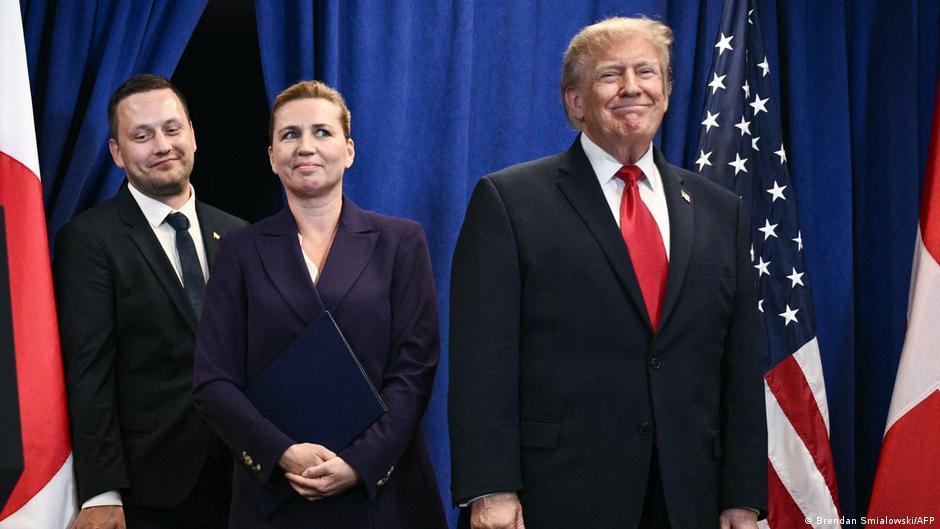
US President Donald Trump signed a security agreement with Denmark and Greenland on Tuesday to enhance security in the Arctic region and the Atlantic Ocean. This signing took place on the sidelines of the United Nations General Assembly, attended by Greenland's President Jens-Frederik Nielsen and Denmark's Prime Minister Mette Frederiksen.
The agreement aims to re-establish a US military base in southern Greenland at Nuuk and establish another on the island's eastern coast at Mestersvig. It also permits updates and expansion of activities at the space facility in northwestern Greenland.
Trump clarified that this agreement would be "amazing" for Europe, the United States, and Greenland. During his speech at the General Assembly, he confirmed that the US would immediately begin developing a significant military presence and constructing two major bases at suitable locations.
The agreement affirms the sovereignty and territorial integrity of Denmark and Greenland while granting US forces extensive freedom of movement across the island and its territorial waters. It prohibits non-NATO member states from establishing military facilities or maintaining a permanent presence without the consent of the signing parties.
Greenland's Prime Minister Nielsen described the deal as a "win-win deal," while NATO Secretary-General Mark Rutte welcomed the signing, noting that it enhances collective security and supports a safer and more stable future for all in the region.
This arrangement follows months of pressure from Trump, who demanded US control over the resource-rich island. Behind the scenes, US, Danish, and Greenlandic officials worked to address security concerns regarding the island, two-thirds of which lies within the Arctic Circle.
Analysis & context
Analysis & Context
From an analytical perspective, this agreement comes after months of secret work between US, Danish, and Greenlandic officials to address US national security concerns regarding the resource-rich island. Previous disputes have caused tensions between the United States, Denmark, and the European Union, prompting the latter to rapidly increase its security drills and financial support for the polar island in response to these geopolitical developments.
In a broader context, Greenland's future has come under global spotlight due to commercial interests and expectations of developing future resources. Two-thirds of its territory lies within the Arctic Circle, where melting sea ice has opened new shipping routes. Despite the prominent role the United States played on the island for decades, its military presence has declined since 1945 from thousands of soldiers at 17 bases to approximately 200 individuals at just one base, Peirce Space Base (Bethvik), in northwestern Greenland today.
This agreement is part of a wider race for influence in the polar region. It grants US military forces extensive freedom of movement across Greenland's land and waters while restricting non-NATO member states from establishing permanent military installations without the consent of the signing parties. NATO Secretary-General Mark Rutte welcomed the treaty, considering it an enhancement of collective security and support for a safer and more stable future for everyone in this vital region.