Sourced fact
The News
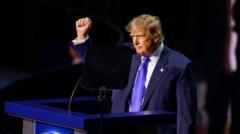
US President Donald Trump announced at the Republican Party convention in Dallas, Texas, that he would give every adult citizen of the United States $5,000 if his party wins control of both the House of Representatives and the Senate in the upcoming midterm elections scheduled for November.
He described the plan as "radical" because it would cost the US government nearly $1.3 trillion due to the country's population of about 270 million adults. Vice President JD Vance linked the potential funding for these amounts to tax revenues collected by Trump from tariffs on imports.
The announcement came amid mixed reactions: Democrats called it an "empty promise," while Republicans liked the idea. However, experts are raising questions about its legal and financial viability, especially amid increasing pressure to end the war with Iran, which has closed the Strait of Hormuz, affecting global oil prices.
In an attempt to justify the plan legally, lawyers pointed out that the promise could be considered legal encouragement or a tax cut rather than direct payments affecting voting behavior. Vance also confirmed that the idea is not controversial because it aims to reward American workers through revenues received from confronting foreign companies.
The announcement puzzled some regarding the implementation mechanism and monitoring of spending within the US only, without allowing shopping in other countries such as China or Germany. Trump has not yet specified how he would request the necessary legislative approval from Congress to allocate these huge sums.
Analysis & context
Analysis & Context
From an analytical perspective, this promise represents an exceptional attempt by President Trump to leverage the election season to strengthen his political base and mobilize voters, with less than two months remaining until the vote. This move reflects a shift in US political discourse, where direct financial rewards are being offered as part of election campaigns, differing from the traditional approach that focuses on long-term social programs or tax policies.
In a broader context, this plan raises serious legal questions about its constitutionality, as federal laws prohibit any payments aimed at influencing how people vote. However, some legal experts believe it could be considered a form of tax cut or an exercise of free speech rights under the First Amendment of the US Constitution. Additionally, the history of midterm elections in the United States often indicates that the governing party loses seats in Congress, making this promise an unprecedented attempt to change this historical trend.
Geopolitical background also plays a crucial role in this announcement, as Trump faces pressure from his party to end the war with Iran, which began last February and led to rising oil prices and global economic fluctuations. Trump believes that enduring short-term economic pain is necessary to prevent Tehran from developing nuclear weapons, linking internal stability and external economics in his election rhetoric.
Finally, Trump has not yet specified how he would monitor the spending of this amount or request Congressional approval for the plan, leaving the door open for discussion around financial transparency and implementation mechanisms under the complex US system of checks and balances.