Sourced fact
Today's top politics stories
Today's summary covers the top global and local political developments, starting with new judicial recommendations that could alter the course of Israeli Prime Minister Benjamin Netanyahu's trial, up to new trade policies promoted by US President Donald Trump and their impact on international relations. The news also covers strategic shifts among jihadist groups in Africa and emerging diplomatic disputes between East African nations, the European Union, and Britain.
Israeli Judges Recommend Dropping Most Serious Charges Against Netanyahu
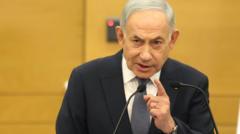
Israeli judges have stated that the prosecution must drop bribery charges against Prime Minister Benjamin Netanyahu, which could give him a significant political boost amid his ongoing legal crisis. The judges clarified to Inspector General Gali Baharav-Miara that the chances of conviction in one of the three cases he faces are extremely low, necessitating a reconsideration of the trial's trajectory. Netanyahu stated in a televised statement that he has endured a decade of suffering and distortion against himself, his family, and his son, viewing the charges as purely political prosecutions that are now beginning to crumble.
Trump Imposes New Tariffs on China and EU Amid Trade War Tensions
The United States announced new tariffs on imports from major partner countries such as China and the European Union, within the framework of trade policies promoted by President Donald Trump. This move aims to balance the US trade deficit after the US Supreme Court ruled that previous tariffs known as "Tariffs for Freedom" were illegal. Additionally, US Trade Representative Jamieson Greer explained that these tariffs aim to "level the playing field for American workers and chart a new, sustainable path for the global economy."
Jihadist Groups Shifting Tactics in Africa Amid Internal Debate
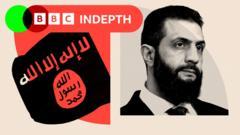
Jihadist group strategies in Africa are shifting from calls for global jihad to adopting practical policies aimed at gaining local legitimacy. For instance, the Somalia-based Al-Shabaab branch distributes food aid to needy families to bolster its image within the local community. Observers note that this shift reflects an internal debate between hardliners who reject compromise and reformists who see working with local actors as a means to seize power. Furthermore, changing geopolitical conditions, including diminished Russian and Iranian influence, have enabled Syrian President Ahmad al-Sharaa to establish a foothold in northwestern Syria through local alliances while avoiding direct conflict with major powers.
Desperate Death Penalty Appeals from Iranian Prisoners Following Protests
Iranian law student Taraneh Rahimi faces the death penalty in Iran following her conviction for "enmity" committed during participation in anti-government protests in January, despite her severe physical injuries preventing her from walking properly. Her aunt, Masoud Nour Mohammad, stated that the two sisters were arrested after joining the demonstrations that swept the country, noting that their mother only recognized them in prison by their voices due to facial distortion and hair loss. Furthermore, UN Special Rapporteur for Iran May Sato has called attention to an unprecedented rise in death sentences against protesting women compared to previous years.
DRC Demands Uganda Response to Gen. Mwohuzi Threats
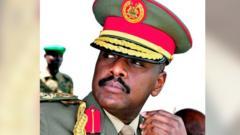
The Chief of Staff of the Ugandan Army, General Muhoozi Kainerugaba, was urged by the Democratic Republic of Congo to retract his statements on X platform supporting an insurgency in the mineral-rich Walikale region, which led to the Congolese Foreign Ministry recalling the Ugandan ambassador in Kinshasa. Congolese officials described these comments as "extremely serious" and damaging to diplomatic relations between the two nations, despite strong military ties established since 2021 through joint operations against the Islamic State and Allied Democratic Forces (ADF). This diplomatic dispute marks the latest in a series of previous tensions after Kinshasa recalled the Ugandan ambassador in 2024 due to similar threats.
New UK-EU Treaty Ends Decade-Long Transition Period
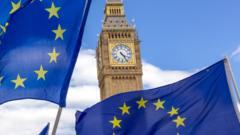
The British government and the European Union are set to publish texts of two new treaties on Thursday as part of recalibrating relations following Brexit. The agreements include details on food exports, emissions trading, and a cost-reduction law for implementing the deal. Both the industrial sector and the government hope that cost reductions will be passed from producers and sellers to customers, although there is a possibility that no clear impact will be noticeable at retail points.
Analysis & context
Reading the day's news
Analytically, these stories link political leaders' efforts to maintain legitimacy and positions through various mechanisms, whether judicial as in Netanyahu's case or economic as in Trump's trade policies. In the broader context, reports indicate a global strategic shift characterized by increased reliance on local tactics and domestic policies to consolidate power and avoid external intervention, evident in jihadist groups' alliances with local actors in Africa.
In terms of geopolitical tensions, international relations appear more fragile, affected by strong responses to informal statements as seen between Uganda and the Democratic Republic of Congo, while countries like Britain and the EU seek to reshape their relationships through new agreements after years of separation. Readers should note that these developments may create an environment of uncertainty affecting regional and global stability, especially with ongoing trade conflicts and proxy wars reshaping traditional alliances.