Sourced fact
The News
Israeli judges have stated that the state prosecutor should dismiss most of the serious charges brought against Prime Minister Benjamin Netanyahu, a move that could provide him with a significant political boost in his struggle to survive amidst his ongoing legal crisis. The judges clarified their concerns to Chief Prosecutor Gali Baharav-Miyara, indicating that the likelihood of conviction in one of the three cases facing Netanyahu is so low that it warrants reconsidering the course of the trial. They also raised doubts about whether his actions in another case reach the threshold of a crime and suggested exploring a plea deal for the third case involving the hosting of a wealthy Australian individual.
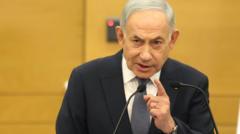
In a televised statement, Netanyahu said he has endured a decade of suffering and exaggeration against himself, his family, and his son, viewing the cases against him as purely political prosecutions that are now beginning to crumble. He added that he is calling for an immediate end to the trial after facing these allegations since 2019, while court proceedings have been affected by the war in Gaza, which forced judges to reduce hearing sessions for security reasons.
In an unprecedented move, the Jerusalem District Court summoned the Chief Prosecutor to express its concerns about the possibility of conviction in Case 4000 regarding a potential conflict of interest agreement with a major telecom tycoon, and in Case 2000 concerning his relationships with other media managers. While the judges kept the door open for potential conviction in Case 1000 related to hosting the wealthy Australian after gifts were given, they emphasized the necessity of reconsidering the trial's course for the sake of the general public interest.
Baharav-Miyara announced she would carefully study the judges' recommendations, especially since Netanyahu has remained Prime Minister throughout the war in Gaza despite the cases deepening political divisions in the country. His opponents believe his fear of prison may have distorted his decision-making as a state leader and made him heavily reliant on right-wing partners to maintain his position.
These developments come at a time when rival politician Gadi Eisenkot is attempting to form a coalition government following last month's inconclusive general elections, where his parliamentary bloc won the most seats but failed to secure an absolute majority. Netanyahu also remains under an arrest warrant from the International Criminal Court (ICC) for alleged war crimes and crimes against humanity in Gaza, which he strongly denies.
Analysis & context
Analysis & Context
From an analytical perspective, this judicial recommendation marks a significant shift in the trajectory of Netanyahu's case, which has lasted six years since he became the first Israeli Prime Minister to face criminal prosecution while still holding office. The political tensions in Israel have intensified due to these trials, coinciding with controversial judicial reforms implemented by Netanyahu's own government.
In the broader context, Netanyahu's opponents argue that his fear of imprisonment has distorted decision-making as a state leader and led him to rely heavily on right-wing partners to retain power. Furthermore, these developments occur while his political rival, Gadi Eisenkot, attempts to form a coalition government following last month's inconclusive general elections.
Netanyahu remains wanted by the ICC for alleged war crimes and crimes against humanity in Gaza, which he vehemently denies despite continuing to serve as Prime Minister throughout the war. This situation has sparked deep divisions within the Israeli political landscape and led to ongoing tensions among various political and judicial factions.
From a regional and international perspective, any development in Netanyahu's case could influence power dynamics in Israel and its ability to manage conflict with Hamas and Hezbollah. Additionally, the judges' decision to reconsider the trial's path may open a new avenue for debate regarding judicial independence and its impact on Israel's democratic system.