Sourced fact
The News
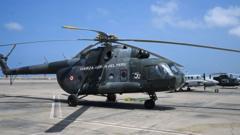
Eight members of the Peruvian Army died in a helicopter crash that fell in a remote area known for drug cultivation and consumption, while the sole pilot survived. The Peruvian Ministry of Defense stated that the aircraft crashed near Sanampa town during a mission to unload an armed patrol in the Three Rivers Valley, known as VRAEM.
The source clarified that the area, nicknamed the "Coca Valley," is the largest zone for coca plant cultivation in Peru, where criminal gangs and remnants of the Northern Sun group operate. The ministry added that search and rescue operations located the aircraft and the nine military personnel on board after it was reported missing late Thursday.
A statement issued by the Joint Command of the Peruvian Armed Forces identified the pilot as Enzo Espinoza Rocky, who was transferred to Lima for specialized medical treatment. The institution expressed deep condolences to the families, friends, and colleagues of the victims who lost their lives while carrying out a military mission, asking God to keep them in His throne.
The ministry continued that the cause of the accident remains unknown despite confirmation that the group rescued was among those killed in the crash. It noted that in February, an MI-17 helicopter crashed in southern Peru, resulting in the death of all 15 people on board.
The source indicated that Peru and Colombia are among the world's largest producers of coca leaves and cocaine according to the United Nations, making the area a target for ongoing military missions.
Analysis & context
Analysis & Context
Analytically, the incident highlights the dangers of military operations in coca-growing areas controlled by organized criminal groups and remnants of former rebel factions such as Northern Sun. The VRAEM region is the largest valley for coca plant cultivation in Peru, where armed gangs operate under difficult conditions with high risks to soldiers' lives.
In a broader context, Peru faces ongoing security challenges due to its economic and geopolitical reliance on cocaine and coca trade, making the area a target for random attacks and continuous security warnings. The region has witnessed previous incidents, such as the February MI-17 helicopter crash that killed all 15 individuals on board, underscoring the recurring risks in these areas.
A United Nations report indicates that Peru and Colombia are among the world's largest producers of coca leaves and cocaine, making fighting organized crime a top priority for international governments. These incidents reveal the persistence of conflict between official forces and armed gangs in remote, hard-to-reach areas.
The question remains on how to improve rescue strategies and military operations to reduce human casualties in such dangerous regions. The incident also raises questions about the effectiveness of the equipment used and its suitability for the harsh weather and geographical conditions in the Three Rivers Valley.