Sourced fact
The News
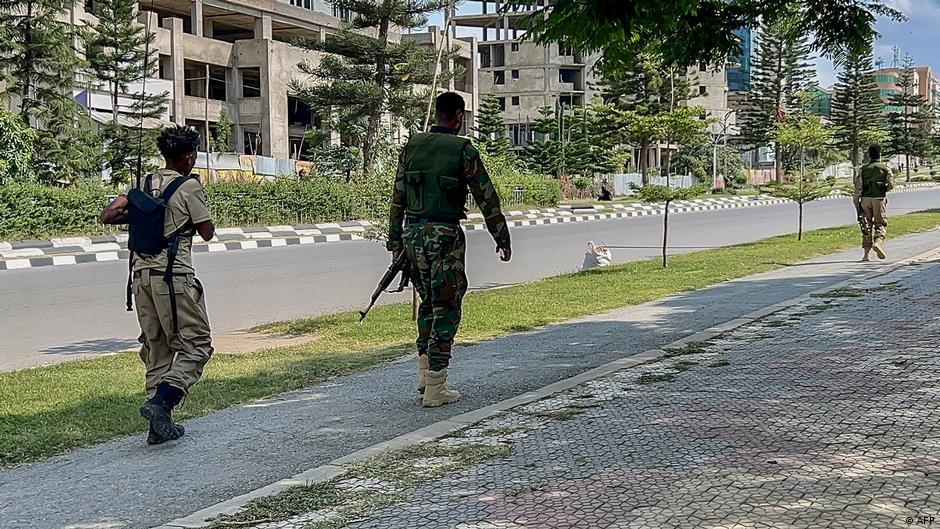
Fighting has flared up again in the Tigray region of northern Ethiopia, where Tigrayan forces launched a major offensive on September 23 that extended into neighboring Afar and Amhara regions. This escalation threatens the fragile peace established by the Pretoria Agreement of 2022, which ended the previous war between the Ethiopian federal government and the Tigray Liberation Front.
The most pressing question is whether this conflict can be linked to the wars and disputes undermining stability in the Horn of Africa and the Red Sea, according to Deutsche Welle. British journalist and Horn of Africa expert Martin Plaut suggested that the conflict could cross Ethiopia's borders to include Eritrea and Sudan, potentially dragging the entire region into a full-scale war.
Galayehu Gitechew Beru, a senior analyst for East Africa at the ACLED Data Project, emphasized that Ethiopia's situation is not isolated but involves neighboring countries and manifests across the Horn of Africa as a whole. He noted that the danger does not stem from a single regional alliance alone, but from the reality that several geographically and politically interconnected conflicts are evolving alongside shifting alliances in Sudan and Somalia.
The African Union has called for immediate self-restraint to end actions that may raise tensions, and urged the resumption of direct talks under the Pretoria Agreement framework. Mahmoud Ali Youssouf, Chairman of the African Union Commission, warned that new political and military alliances could reflect progress made since 2020, while former Nigerian President Olusegun Obasanjo was tasked with supporting diplomatic efforts.
The alliance between the Tigray Liberation Front and six other Ethiopian factions seeking to oust Prime Minister Abiy Ahmed's government poses a potential threat to the Ethiopian state, which faces multiple fronts simultaneously. Fighting in the Afar region, which connects Ethiopia to the Bab-el-Mandeb strait, threatens a vital economic artery, while tensions with Eritrea intensify following the deterioration of bilateral relations after Eritrea previously participated in the war against Tigray.
Plaut observed that Ethiopia and Eritrea play indirect roles on opposite sides of Sudan's war: Ethiopia supports the Rapid Support Forces (RSF), while Saudi Arabia and Egypt back Eritrea and the Sudanese Armed Forces (SAF). Direct involvement by both parties in combat could increase pressure on Sudan's eastern borders and disrupt military and economic supply lines.
The Bab-el-Mandeb strait, which connects the Red Sea to the Arabian Gulf and the Indian Ocean, faces security risks that could affect international navigation, especially as Ethiopia-Eritrea relations deteriorate. Although a full-scale regional war is not inevitable given differing stakeholder interests and the absence of a unified military alliance, the nature of intertwined conflicts makes it easy for them to escalate into a general regional conflict if not contained.
Analysis & context
Analysis & Context
From an analytical perspective, the risk of escalation does not stem from a single regional alliance alone but arises from the reality that several geographically and politically interconnected conflicts are already unfolding. The clashes in the Afar region take on particular importance because they encompass the main transport corridor linking inland Ethiopia to Djibouti; a significant portion of Ethiopia's international trade passes through it, meaning any sustained fighting there threatens a vital economic lifeline.
In the broader context, Eritrea plays a pivotal role: its troops participated in the war between 2020 and 2022 against the Tigray People's Liberation Front (TPLF), but relations have since deteriorated as Ethiopia's ambitions to access the Red Sea grew alongside Eritrean security concerns. Plaut noted that the war could certainly escalate and that Eritrea might become a direct participant, while Asmara has denied accusations of supporting armed groups hostile to the government.
Moreover, Sudan's situation since 2023 between the Sudanese Armed Forces (SAF) and the Rapid Support Forces (RSF) directly links these dynamics: Plaut observed that Ethiopians are aligned with the RSF and Mohamed Hamdan Dagalo, while Eritrea, Egypt, and Saudi Arabia support the SAF. If Ethiopia and Eritrea engage in direct confrontation, the competing parties in Sudan's conflict may be incentivized to exploit the new situation, potentially adding further pressure on Sudan's eastern borders and altering military and logistical calculations.
Finally, the strategic positioning of Ethiopia, Eritrea, and the Bab-el-Mandeb strait—which connects the Red Sea to the Gulf of Aden and the Indian Ocean—links regional security with global security. The war in Yemen demonstrated how instability around the Red Sea can disrupt international shipping and attract external powers; similarly, any significant deterioration in Ethiopia-Eritrea relations could impact the broader security architecture of the Red Sea.