Sourced fact
The News
Strong El Niño-related storms have caused catastrophic flooding across northern Peru and the Ecuadorian coast, necessitating large-scale rescue and evacuation operations as well as an emergency road closure.
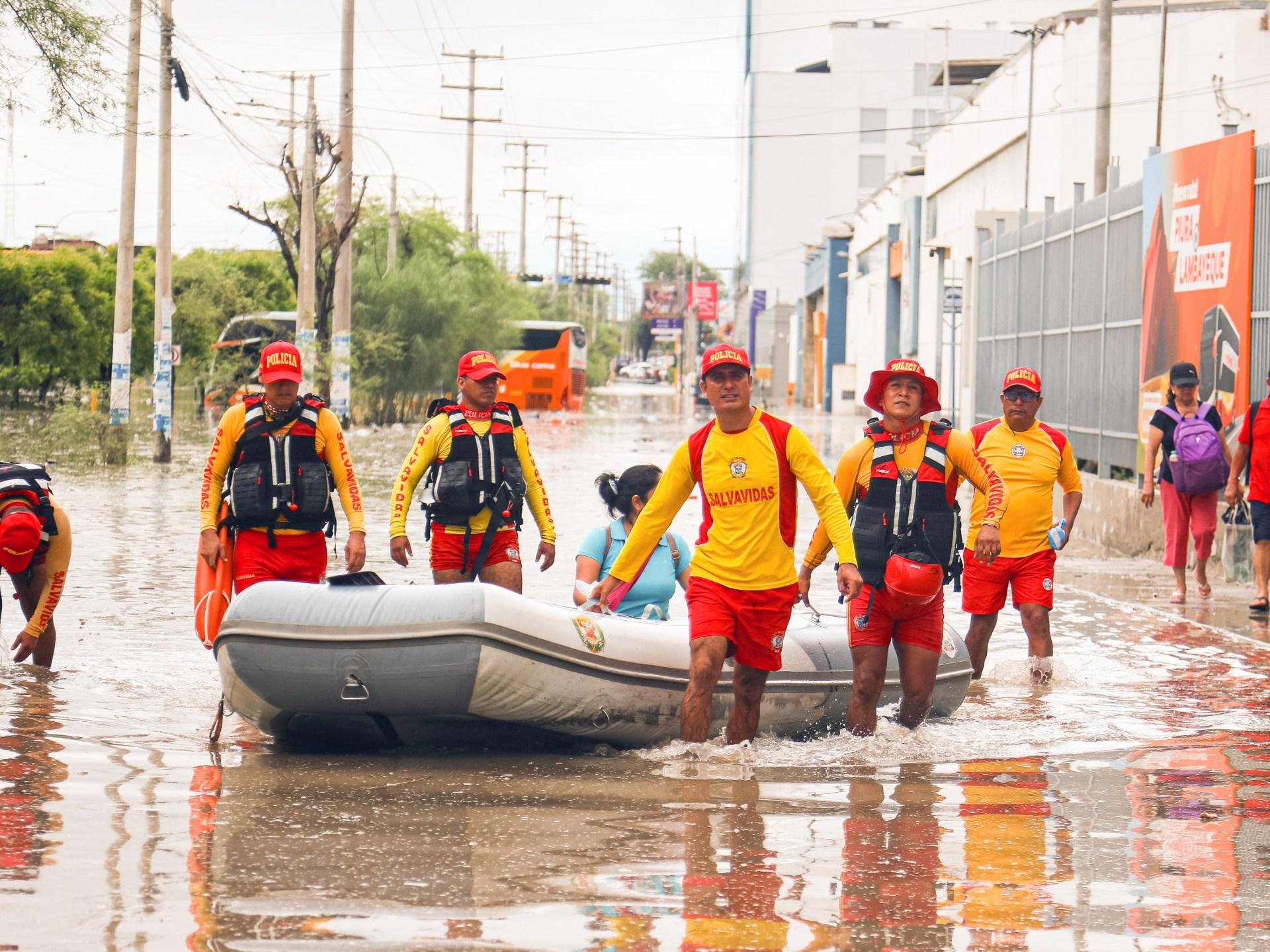
The floods affecting Peru stretch along the Pacific coast from the border with Colombia in Ecuador to northern Peru, where the city of Piura recorded a historic rainfall of 143 mm within 24 hours, submerging streets in knee-deep water.
President Dina Boluarte stated that rescue teams saved 400 people from their flooded homes in the north, while about two dozen remain trapped; she added that approximately 2,000 families have been affected by the disaster according to initial reports.
In Ecuador, floods and landslides triggered by heavy rains since late August have killed at least 34 people and affected 47,000 individuals, according to the country's Risk Management Agency, which declared a state of national emergency.
The agency noted that the collapse of two rivers in Esmeraldas province led to evacuations, while more than 50 road sections across the country were damaged, including the main highway between Quito and the coast.
Ecuadorian authorities also had to reschedule polling centers in five provinces to hold local elections on Sunday due to storms that disrupted forecasts predicting peak El Niño conditions in February.
A resident of Piura, Pierre Garavitto, told AFP that this is the first rainfall from the El Niño phenomenon, adding that he lost everything before the extraordinary power of the phenomenon expected until February.
Meteorological experts forecast that El Niño will remain at an "extreme" level in Peru across the Piura and Tumbes regions until Monday, describing it as potentially a "mega-El Niño."
The phenomenon has also led to rising food prices due to reduced crop production and fishery yields, with Lima recording annual inflation exceeding 5% in October—the highest in three years.
Analysis & context
Analysis & Context
From an analytical perspective, the "El Niño" phenomenon is a natural climate pattern that begins with the warming of the tropical Pacific Ocean and leads to radical changes in global rainfall and temperature patterns. Scientists have classified the current event as "super" or "extremely strong," with data suggesting it may be the strongest on record, thereby exacerbating natural risks in the region.
In a broader context, Latin American countries face significant economic challenges due to this phenomenon, as floods have reduced crop production and fish catches, significantly raising food prices. Annual inflation in Lima rose above 5% in October—the highest in three years—and the Peruvian Central Bank expects the phenomenon to cost the economy one percentage point of growth this year.
The disaster has also negatively impacted electoral processes in Ecuador, where authorities had to relocate polling centers in five provinces and postpone some local elections originally scheduled for February to avoid peak storm conditions. These events highlight the increasing impact of climate change on the social and economic stability of affected countries.
Finally, reports indicate that states of national emergency remain in effect in Peru, Ecuador, and other Latin American nations to address the ongoing consequences of the phenomenon, which continues to intensify with forecasts of severe storms expected to persist until the end of the current month.