Sourced fact
The News
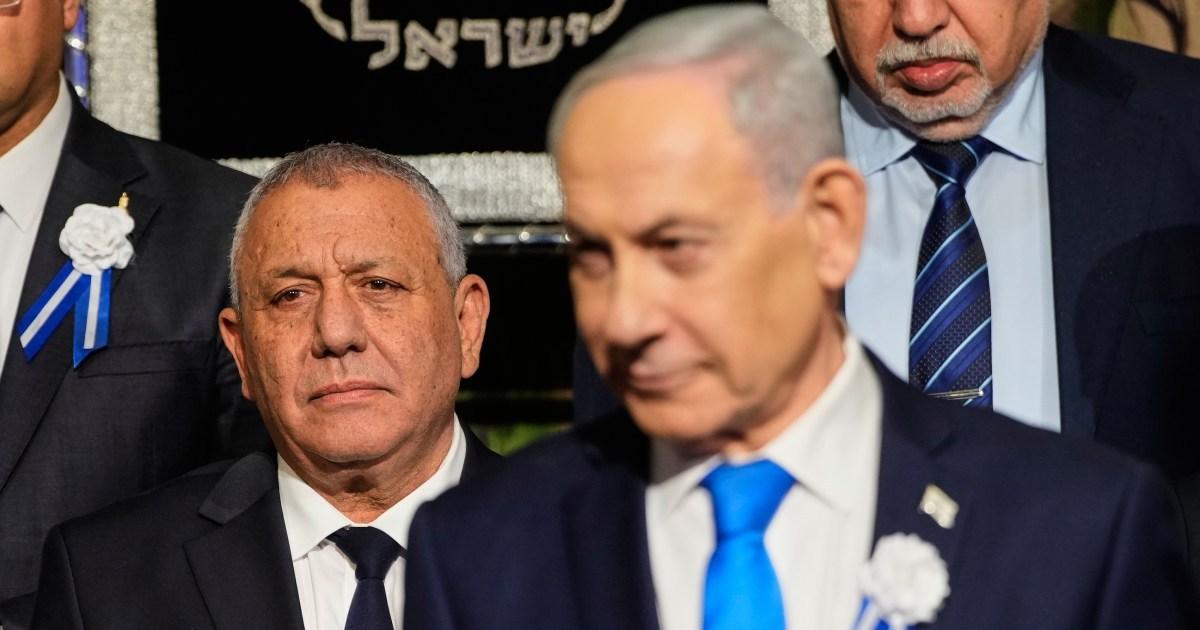
Israeli Prime Minister Benjamin Netanyahu, in an unprecedented move, has announced his readiness to alternate the position of head of government with his main rival, Gadi Eisenkot, as part of a national unity government. Eisenkot, leader of the centrist Yesh Atid party whom the Israeli President appointed to form the new government, responded immediately by agreeing to hold urgent talks within 24 hours to seriously test Netanyahu's proposal.
In a statement issued on Saturday, Eisenkot called for Netanyahu to meet that evening to discuss the broad outlines of key policies based on a proposal submitted to Netanyahu on Sunday but not yet answered. The Palestinian News Agency (Wafa) reported that Netanyahu said that although Likud is the largest party in the country, he is willing to abandon the principle of leading with the largest party, allowing Eisenkot to serve as Prime Minister first while Netanyahu serves as Deputy Prime Minister for the initial period.
Reports indicated that on Friday, Eisenkot had promised to announce the formation of the new Israeli government before the official deadline of December 6 without resorting to a 14-day extension, while accusing Netanyahu of delaying coalition talks in pursuit of new elections. Correspondent Nour Oudeh from Al Jazeera, reporting from Bethlehem in the occupied West Bank, noted that Eisenkot's call for talks aims to test Netanyahu's seriousness and genuine desire to negotiate on core issues rather than buying time.
In another context, the elections held on October 27 failed to achieve a clear majority for any bloc, with Netanyahu and his right-wing allies and hardline religious partners securing 53 seats versus 48 seats for Eisenkot and their potential partners in the 120-seat parliament. In response, Yair Golan, leader of the Democratic Front group who previously opposed any form of unity with Netanyahu, rejected the new proposal, describing it as "tricks and deceptive tactics," and affirmed that Netanyahu has lost and that the duty is to respect the will of voters and form a change and rescue government.
Yousef Jabrín, leader of the Joint List coalitioning Arab parties, also expressed his desire to topple the current government described as bloody and negligent, calling for realizing the shared will of Jewish and Arab peoples to oust Netanyahu within the current week. The agency reported that Netanyahu's announcement highlights the pressures he faces with Eisenkot winning support from potential partners who may grant him a legislative majority or allow the formation of a coalition government.
Analysis & context
Analysis & Context
Analytically, this offer represents a strategic intervention by Netanyahu to counter increasing pressure to form a stable government following the October 27 elections, which did not clearly resolve parliamentary majority. Eisenkot successfully gained support from potential partners who could grant him the necessary majority to form a government, placing Netanyahu under significant pressure to respond realistically or face another governmental failure.
In the broader context, Netanyahu faces sharp criticism from leaders of other parties such as Yair Golan of the Democratic Front and Yousef Jabrín of the Joint List, who view this offer as deceptive tactics aimed at delaying the required governmental change. These leaders believe that Netanyahu's current government is a "clogged" and "blood-soaked" administration that must be replaced immediately to implement the will of both Jewish and Arab voters.
The history of recent Israeli elections points to the difficulty of forming stable governments amidst political fragmentation between the extreme right bloc and the centrist bloc, where Netanyahu and his allies won 53 seats versus 48 for Eisenkot and their potential partners. The failure of either side to secure an absolute majority is considered a critical factor driving negotiation attempts or the formation of unconventional coalitions that could radically alter Israel's political landscape.
Yair Golan's rejection and many other parties' refusal of any unity formula with Netanyahu underscore the importance of this stance, reflecting a shift in public and political opinion against continuing Netanyahu's rule, which faces corruption charges and poor management of the security crisis. These developments may signal the end of Netanyahu's political era or the beginning of a completely new phase in modern Israeli political history.