Sourced fact
The News
Government data shows that more than 5000 people have died from the ongoing Ebola outbreak in the Democratic Republic of Congo, making it the deadliest epidemic in the country's history since its onset in May. Confirmed cases, which have surpassed 10,300, are distributed across eight of the nation's 26 provinces, while the main epicenter remains in North-East Ituri province, where an ongoing conflict hampers efforts to contain the virus.
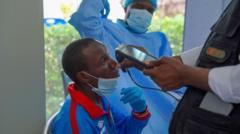
The Ministry of Health stated in its latest update that the current case fatality rate stands at 48.6%, noting that the World Health Organization in Africa has called for scaling up key control measures, improving access to affected areas, and engaging local communities to end the epidemic. Screening and treatment operations are currently underway alongside clinical trials for vaccines; however, the Bundibugyo virus strain responsible for this outbreak still lacks an available cure or vaccine.
The United Nations indicates that this is the seventeenth Ebola outbreak in the history of the Democratic Republic of Congo and the second largest on record, following the 2014-2016 West Africa epidemic which claimed over 11,325 lives and spread to several European and American countries. The UN Secretary-General warns that the current epidemic is killing at a much faster rate than previous outbreaks, as the disease causes sudden symptoms such as vomiting and diarrhea, potentially leading to organ failure and internal or external bleeding in some patients.
The virus spreads through contact with infected bodily fluids from patients, such as blood or vomit. According to the UN, both health workers and political figures have faced attacks while responding to the epidemic. A nurse was killed and another health worker seriously injured in an assault where local youths accused health workers of contaminating water sources and spreading the virus. Additionally, a politician was beaten to death for supporting disease containment measures, Red Cross volunteers were injured, and two emergency service vehicles were burned in 11 violent incidents during the first 100 days of the outbreak.
Uganda recorded two deaths and 20 confirmed cases since the outbreak began before new case reports ceased in August, with travel restrictions remaining on its borders. Kenya recorded nine confirmed cases and two deaths. In Nigeria, two suspected cases were identified, isolated, and tested after a woman's infection was confirmed in October, and she was transferred to Switzerland for treatment. The European Centre for Disease Prevention and Control stated that the probability of infection for Europeans is "very low."
Analysis & context
Analysis & Context
From an analytical perspective, the persistence of the epidemic in the conflict-ridden Ituri region reflects the immense security challenges facing health responses in Africa. Armed conflicts and population displacement make implementing surveillance programs and medical isolation extremely difficult, explaining why death tolls continue to rise despite international efforts.
In a broader context, this is the seventeenth Ebola outbreak in the history of the Democratic Republic of Congo and the second largest on record after the 2014-2016 West Africa epidemic which claimed over 11,000 lives. Data shows that the current speed of virus transmission exceeds previously recorded rates, necessitating an urgent and coordinated response among African nations and international organizations.
The report also highlights a serious humanitarian dimension concerning repeated attacks on health workers and politicians attempting to combat the epidemic. A nurse was killed and two others injured in assaults carried out by local groups who accused them of contaminating water sources, while a politician was beaten to death for supporting preventive measures.
Reports indicate that the risk of infection in Europe is "very low" according to the European Centre for Disease Prevention and Control, yet precautions remain necessary due to cross-border transmission from Congo to neighboring countries. Clinical trials for vaccines continue, while research for an effective treatment proceeds without final results to date.