Sourced fact
The News
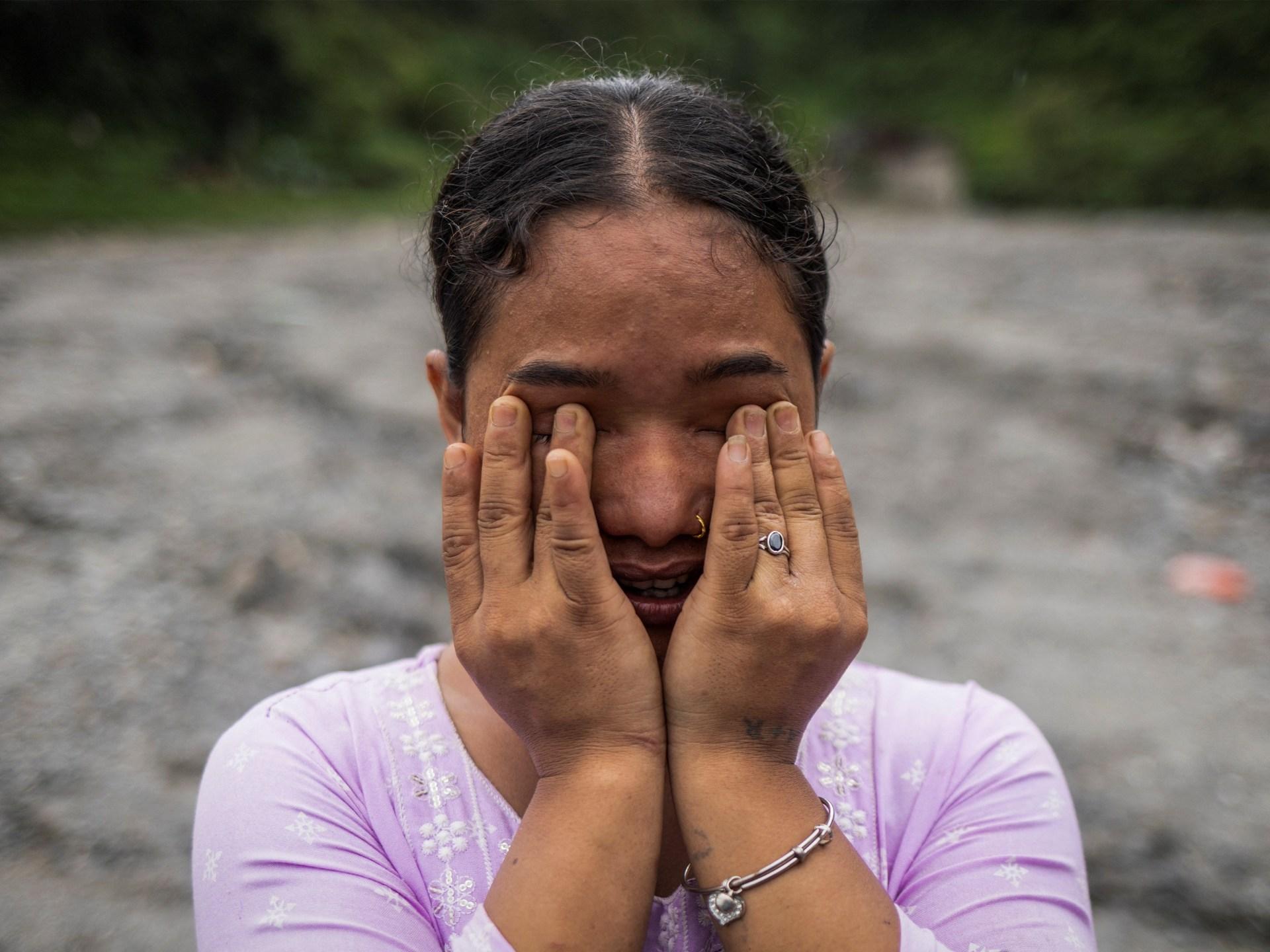
According to Al Jazeera Net, Anousha Thapa Majar returned from her job in the Maldives to her home in the small town of Betrawati on the riverbank in Nepal after hearing news of the devastating floods, but she found instead of her family's house just a flat expanse of hardened gray mud where there were no traces of the house or the village itself. The 23-year-old girl stood on the spot where her two-story home used to be: "If my house is buried under this mud, then my grandmother must still be here underneath as well," she said, noting that her grandmother was last seen resting in her bed before the disaster.
The massive torrents of mud, rocks, and water that occurred last month, resulting from a glacier collapse on the border between Nepal and China, destroyed settlements along the Trishuli River, killing at least 1,386 people on the Nepalese side of the country. Authorities reported that the number of missing persons still ranges around 5,130, and despite ongoing search operations, no one has been found alive for several days.
Kalvana Thapa Majar, a 43-year-old clothing merchant, recalls the moment a friend called her from an area upstream saying: "Run! Run!" She said she ran only to look back and realize everything had gone, even the people who were running behind her. In Devigat downstream, broken remnants of houses still stand, but many residents say there is no reason to return because the land itself has disappeared under debris.
The disaster reopened wounds from the 2015 earthquake in Nepal that killed about 9,000 people. Sita Thapa Majar, a 45-year-old teacher and Kalvana's sister, said: "After the earthquake, families could at least rebuild on their land, but this time we lost everything," referring to the loss of homes, land, and the future. Shanti Dangol, aged 61, holds a broken piece of ceramic that is the last visible trace of her home while holding photos of the village she used to run for tourists and pilgrims, saying: "Economically, people here were starting to improve, and now nothing remains."
Analysis & context
Analysis & Context
Analytically, this massive disaster shows how rapid climate changes in the Himalayan region increase the risk of glacial collapses and sudden floods, making rural areas extremely vulnerable to such powerful natural phenomena. The destruction of an entire village under a thick layer of mud indicates the immense power of water currents that exceed the capacity of traditional infrastructure to resist or protect its inhabitants.
In the broader context, Nepal faces major challenges in managing repeated natural disasters accompanied by a lack of financial and human resources needed for effective response and rapid reconstruction. Teacher Sita noted that the previous earthquake allowed rebuilding on the same sites, but the current floods destroyed the land itself, making re-stabilization nearly impossible without significant international intervention and new strategic planning.
This event also reflects the wider impact of environmental disasters on the local economy, as residents have lost their livelihoods and properties entirely, exacerbating poverty and forced migration in fragile mountainous regions. Personal traces such as shoes, school scarves, and scattered bags strewn along the road indicate the speed and nature of the panic that engulfed the area when the waters arrived.
Finally, there is an urgent need for international and regional mechanisms for cooperation in early warning and disaster management in the Himalayan region, which suffers from increasing risks threatening the stability of millions of people in countries such as Nepal, China, and India. Stories of survivors like Shanti Dangol, who lost everything they built economically, underscore the necessity of reconsidering land-use policies and urban planning in flood-prone areas.