Sourced fact
The News
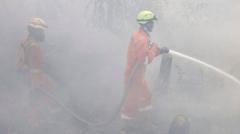
The Indonesian Ministry of Health announced that more than 175,000 people have suffered from respiratory illnesses since August, amidst ongoing forest fires sweeping across the country for weeks. These cases range from coughs and bronchitis to serious conditions such as pneumonia, with over 40,000 cases recorded among young children.
Fires have covered vast areas of Indonesia as well as neighboring countries Malaysia and Singapore, causing air quality indices to deteriorate to unhealthy levels. Authorities face significant challenges in combating these fires due to the extensive area and difficult swampy terrain conditions that make extinguishing flames extremely difficult, according to BBC News.
Teddy Indra Wijaya, Secretary-General of the Indonesian Government, stated: "All forces continue to move from air to ground, and every effort is being made to extinguish the fires and reduce the impact of smoke; the most important thing is protecting the public from the danger of forest and land fires." Official data also indicated that the number of illness cases more than doubled to 113,000 by September 9 compared to 50,000 at the beginning of the same month.
The severity of this year's fires is attributed to the "El Niño" phenomenon, described by some as "Godzilla," which led to severe drought and increased the spread of hotspots detected by the independent forest monitoring platform Nusantara Atlas to reach 734,000 points—a figure exceeding by 30% the deadly fire season in 2019.
Analysis & context
Analysis & Context
From an analytical perspective, this crisis represents a serious escalation of an annual routine crisis facing Indonesia during the dry season, which typically extends from July to October. The danger lies in the fact that abnormal climatic conditions resulting from the "El Niño" phenomenon have transformed seasonal forest fires into an environmental and health disaster with wide regional dimensions, necessitating urgent intervention beyond routine measures.
In a broader context, reports indicate that toxic smoke has negatively impacted wildlife, as a rare gorilla died due to oxygen deficiency in palm oil plantations in West Kalimantan. Additionally, civil groups and local tribes have filed collective lawsuits against the central and local governments, accusing them of deliberate negligence and failure to take sufficient measures to prevent this annual disaster, which is worsening each year.
At the regional level, the effects of the haze have extended to the Philippines and Singapore, where authorities there issued daily warnings for residents to stay indoors. In Malaysia, water transfer operations were conducted with the help of the Japanese Self-Defense Forces to increase water reserves in hydroelectric dams in preparation for an expected dry season in October, reflecting regional cooperation to address the impacts of climate change and cross-border fires.