Sourced fact
The News
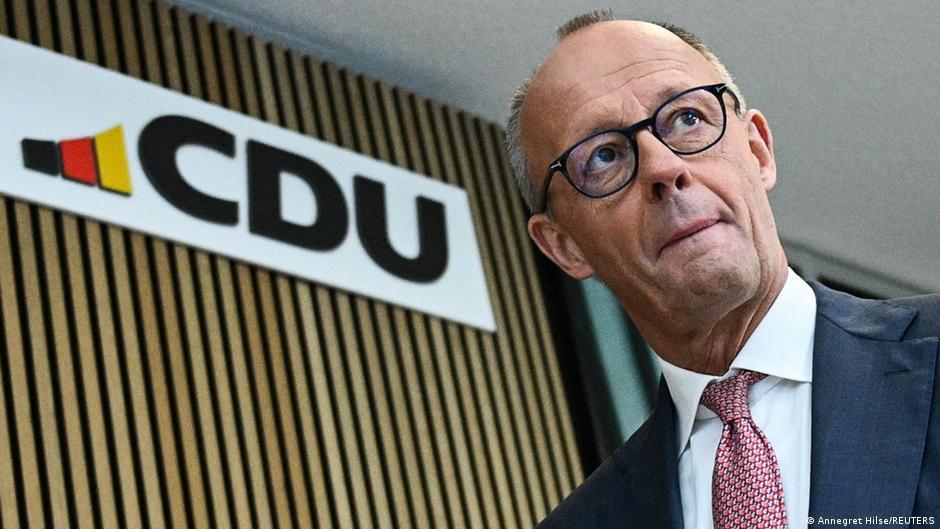
Two elections held in German states on Sunday shed light on the federal government led by the Christian Democrats (CDU) and its Chancellor, Friedrich Merz. For the first time, his party failed to reach the five percent threshold required to enter the parliament in the state of Mecklenburg-Vorpommern in northeastern Germany. The party also suffered heavy losses in Berlin, where it had previously held a seat, which could force it into opposition benches rather than ruling ones.
Chancellor Merz clarified that these results represent a profound turning point and a major shock to the party, unprecedented in its German history. He pointed out that federal policies that failed to convince the public played a role in the defeats, while confirming there is a dramatic shift in the German party system, with many other countries witnessing similar changes.
Merz stated that more than forty percent of votes went to destructive forces challenging the parliamentary system and seeking radical, simplified solutions, without naming the specific parties but clearly referring to the Alternative for Germany (AfD) and the Left Party. Meanwhile, Alice Weidel, head of the Alternative for Germany, declared that her party had replaced the CDU as the people's party due to the unintelligent "firewall" policy that refuses alliances with either side.
In Berlin, the Left Party succeeded in doubling its result, reaching 26 percent and winning the election there for the first time, despite a controversy involving a rapper who called for violence against Israeli soldiers, which did not significantly affect the party's results. Wolfgang Minow, a political scientist from the University of Rostock, considered the claim by the Alternative for Germany that it represents conservative interests to be incorrect, viewing it instead as an extreme-right party that has gathered diverse groups together.
Insa Scherfner, head of the Left Party's state association, said she would not tolerate any forms of anti-Semitism within the party and would work on building bridges in Berlin. Meanwhile, Manuela Schwesig, the Social Democrat candidate in Mecklenburg-Vorpommern, expressed her willingness to negotiate with the Greens and the Left to fulfill her election pledges, despite criticism of Merz's plans for radical social reforms.
Analysis & context
Analysis & Context
From an analytical perspective, these results mark a milestone in modern German political history, as the Christian Democratic Union broke its historical barrier of success in state legislative councils. This collapse indicates the erosion of the traditional voter base that the party relied upon for years, in favor of new and extreme political forces on both ends of the political spectrum.
In a broader context, the rise of the Alternative for Germany in certain states reflects a shift toward the far right, exploiting voter dissatisfaction with the economic and social situation. Additionally, the Left Party's victory in Berlin despite campaign scandals highlights demographic and political changes in the German capital, where a significant portion of the population has Turkish origins.
Expert opinions, such as those from political scientist Wolfgang Minow of the University of Rostock, indicate that describing the Alternative for Germany as representing conservative interests is inaccurate; rather, it is an extreme-right party that succeeded in uniting diverse groups. Furthermore, the refusal to cooperate with the Left Party signals a negative outlook for future government coalitions in Germany.
Finally, the federal government led by Merz faces a political paradox, as it must maintain its coalition with the Social Democratic Party despite disagreements over austerity policies and social reforms desired by the Chancellor.