Sourced fact
The News
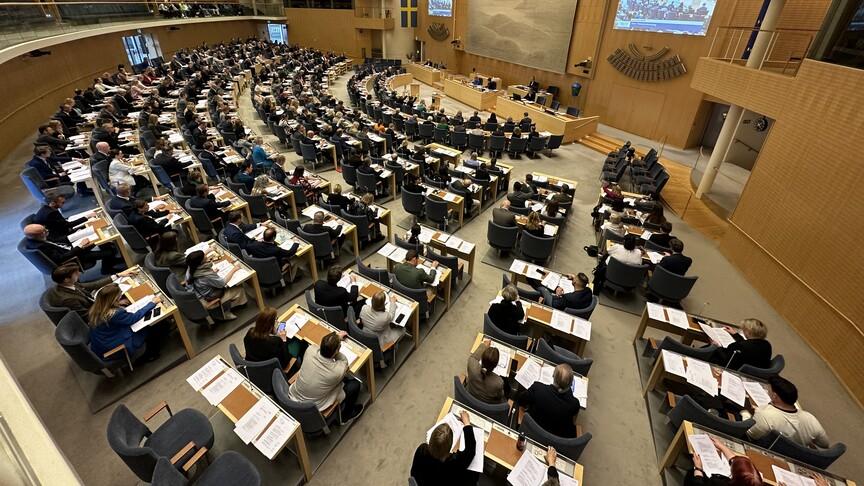
The new parliamentary session officially began in Stockholm on Tuesday, with King Carl XVI Gustaf opening the Swedish Parliament at the start of the 2026-2027 legislative year. This came amid ongoing political deadlock regarding the formation of a new government following the latest elections.
The opening ceremony was attended by members of the royal family, ministers, and parliamentary officials, according to SVT public television. The ceremony followed a service at Strömsborg Church in Stockholm.
Social Democratic Party leader Magdalena Andersson expressed her readiness to abandon previous attempts to form a government, while Christian Democrat Party leader Olof Skoogren stated his willingness to explore government formation possibilities based on a request from Parliament Speaker Andreas Norlén.
Norlén explained that he may call the parliament to elect a prime minister if government formation attempts fail, adding that he awaits the results of Wednesday's meetings with party leaders. Meanwhile, Center Party leader Elisabeth Svantesson indicated that her party will not join any government that includes the Social Democratic Party due to economic differences.
Andersson called on the parties to reconsider their positions and reach middle-ground solutions, while Social Democratic Party leader Nooshi Dadgostar urged the Center Party specifically regarding its political alliances. In contrast, Rightist Sweden Party leader Jimmie Åkesson confirmed that his party will demand ministerial positions in any government it supports, while Green Party leader Amanda Lind called for a meeting between parties involved in the left-center coalition.
Analysis & context
Analysis & Context
Analytically, Sweden faces significant challenges in forming a new government due to sharp political differences among the parties. Major parties differ over potential alliances and issues such as economic policy and immigration, leading to political gridlock.
In a broader context, this political crisis reflects the challenges facing Western democracies in addressing social and economic changes. Political parties strive to balance popular demands with government commitments, leading to difficulties in forming stable and effective governments.
It is noteworthy that smaller and far-right parties have become more influential in the political landscape, increasing the complexity of forming government coalitions. This dynamic highlights the need for new political understandings and innovative solutions to current coalition challenges.