Sourced fact
The News
Japan announced today the deployment of fighter jets and expressed strong protest following the incursion of two suspected Russian aircraft into its airspace early Tuesday, while South Korea and Taiwan implemented similar measures. Reports indicate that these incidents occurred in informal air defense zones outside official territorial borders, where governments identify incoming aircraft for security purposes without necessarily considering them direct legal violations unless they enter national airspace.
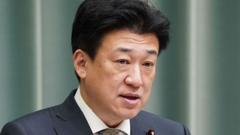
Minister of State Minoru Kihara, spokesperson for the Japanese Cabinet, stated that the flight path near Okinoshima in the southwest represents a "serious violation of sovereignty" by Japan and is "absolutely unacceptable," noting that the last similar incident occurred in 2024 when a Russian patrol aircraft entered airspace near Rebun Island. South Korea denied that its airspace was violated, stating it sent fighter jets after an unspecified number of Russian aircraft entered its air defense zone over the Sea of Japan. Taiwan stated it "responded appropriately" to the entry of two Russian aircraft into its air defense zone.
This escalation occurs as the world awaits the ASEAN Economic Summit taking place in China this week, which will feature the presence of Russian President Vladimir Putin alongside US President Donald Trump. Tensions between Japan and Russia have intensified due to a long-standing regional dispute over an archipelago in the Pacific Ocean; Putin visited one of these islands in August, prompting sharp criticism from Japanese Prime Minister Shigeru Ishiba (Sanai Takayoshi), while a Japanese journalist was detained in October on espionage charges.
Analysis & context
Analysis & Context
From an analytical perspective, the repeated entry of Russian aircraft into the air defense zones of countries such as Japan, South Korea, and Taiwan reflects a notable escalation in military tensions in East Asia. These incidents are not merely isolated events but point to a Russian strategy aimed at testing regional responses ahead of major diplomatic meetings, thereby adding a layer of uncertainty to the current geopolitical climate.
In the broader context, tensions between Japan and Russia are intensifying due to the longstanding border dispute over an archipelago in the Pacific Ocean. Putin visited one of these islands last August, only to face sharp criticism from Japanese Prime Minister Shigeru Ishiba (Sanai Takayoshi). Furthermore, the detention of a Japanese journalist in October on espionage charges has heightened pressure on Tokyo, making any Russian military movement extremely sensitive for alliance camps in the region.
The East China Sea contains overlapping air defense identification zones declared by multiple nations, including China, Taiwan, Japan, and South Korea. While foreign military aircraft are expected to enter these areas, there is no legal obligation to report before entry. This ambiguous legal situation often leads to such incidents, which can escalate rapidly if not handled with extreme caution by all concerned parties.