Sourced fact
The News
The Supreme Court of India has announced the temporary release of two convicts sentenced for murder and torture crimes against Bilkis Bano, a Muslim woman who was gang-raped during the communal riots in Gujarat in 2002.
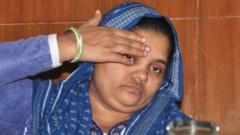
Bilkis Bano stated in a statement that she felt pain, shock, and an inability to comprehend the news of the release upon hearing it through media reports without being summoned to the court. She added that she will continue her struggle for justice despite the release being based on a judicial order citing the long duration of imprisonment exceeding 17 years and one defendant suffering from severe disability.
According to lawyer Shubha Gupta, the news left Bilkis extremely sad as she had no information that the case would be brought before the Supreme Court again. Gupta pointed out the difficulty in understanding the release decision in a case that shocked the world's conscience and was not merely a routine criminal matter.
Bano continued, stating that repeating such decisions raises her fears of losing trust in the judiciary once again after 24 years of struggle for justice. She confirmed she will fight this decision for her children who do not deserve to live surrounded by fear and scars throughout their lives.
The background of the incident dates back to bloody riots that began in 2002 after a fire on a passenger train that resulted in the death of 60 Hindu pilgrims, prompting Hindu groups to attack Muslim neighborhoods and kill over a thousand people, most of whom were Muslims.
On the morning of March 3, 2002, a group of men attacked Bilkis while she was pregnant with her second child and living with her three-year-old daughter in her village. Bano said the attackers were neighbors she had known since childhood; they stripped off her clothes and gang-raped her while raping and killing her aunt who had given birth to a newborn just a day prior.
After Bilkis lost consciousness, the attackers believed she was dead and left her, while she survived along with two other children aged seven and four among the massacre victims. None of the perpetrators were arrested until 2004 after the Supreme Court intervened and requested a federal investigation, transferring the case from Gujarat to Mumbai due to the local courts' inability to deliver justice.
It is also noted that all eleven convicts serving life sentences were released in 2022 following a government order in Gujarat, but the Supreme Court later overturned this decision in 2024.
Analysis & context
Analysis & Context
From an analytical perspective, this situation highlights the ongoing tension between judicial independence and political or social considerations that may influence the handling of sensitive cases in India. The decision to release perpetrators of such a heinous crime on bail remains highly controversial, especially given that the case concerns global public opinion and is considered one of the most painful crimes in the nation's modern history.
In the broader context of the 2002 Gujarat riots, the attacks primarily targeted Muslim minorities following the train incident in Godhra city, which resulted in the deaths of 60 people from the Hindu community. Extremists exploited this incident to blame Muslims for starting the fire, leading to violent attacks that lasted three days and caused over a thousand deaths, most of whom were Muslims.
The Bilkis Bano case is a symbol of the long struggle of survivors in India who faced significant systemic obstacles in obtaining justice; her case was transferred from Gujarat state to Mumbai because local courts could not ensure fair justice. Despite the legal victories Bano achieved over the years, decisions such as the temporary release of perpetrators undermine the credibility of the judicial system and reopen old wounds for survivors and their families.
This incident also raises discussion around the role of Prime Minister Narendra Modi, who was the Governor of Gujarat state at the time of the riots, where he is accused of negligence in preventing the disaster despite his consistent denial of any personal fault. The continued debate surrounding his responsibility reflects the political and social complexities that continue to affect the processing of transitional justice issues in India even today.