Sourced fact
The News
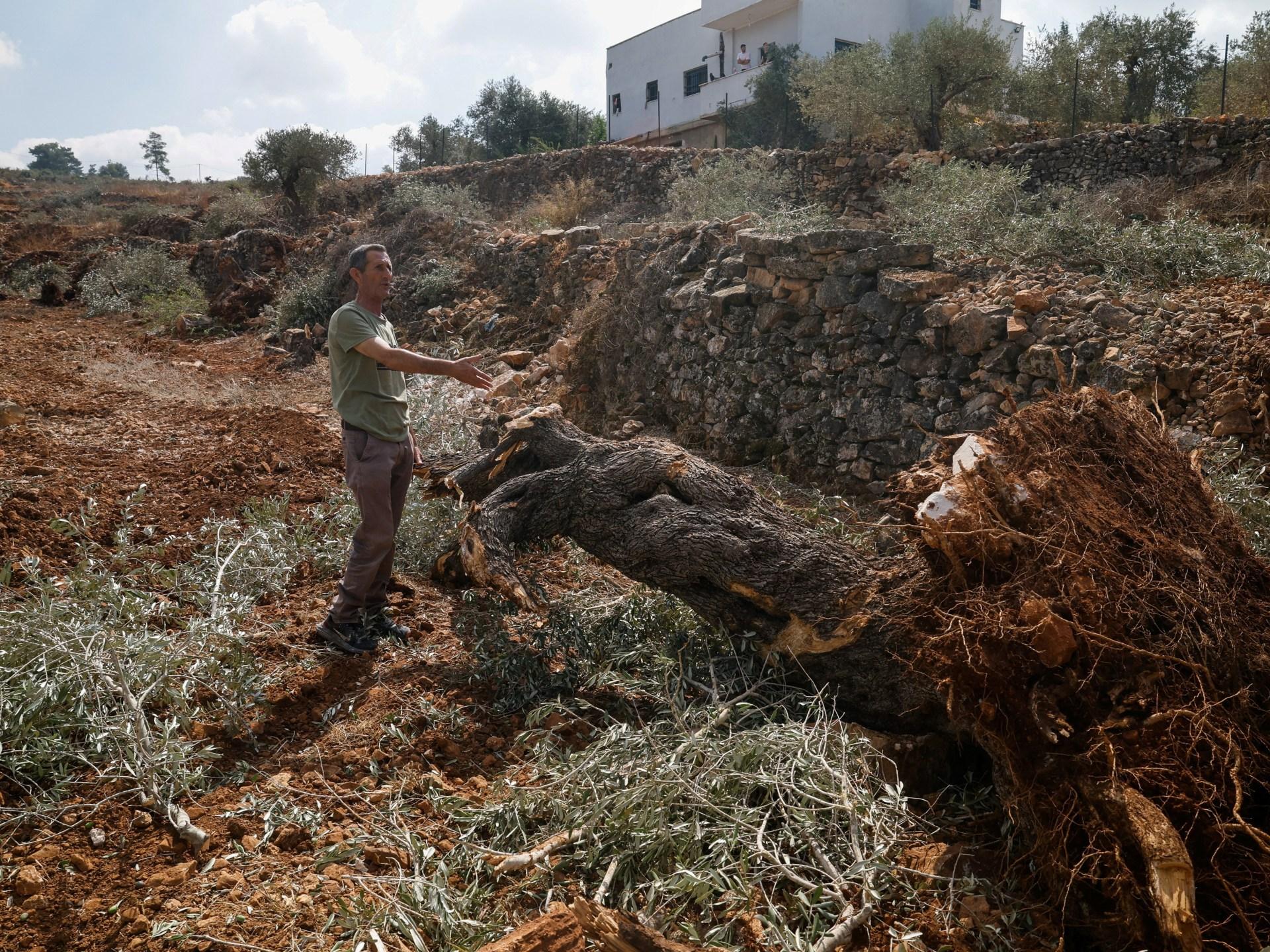
Reuters reported that Israeli tanks breached rows of olive trees in a village near Ramallah in the occupied West Bank, at a time when Palestinian farmers were preparing to begin their annual harvest. Villagers confirmed that the destructive operations took place while the crops were fully ripe and ready for picking.
Farmer and landowner Abdelfattah Tameem stated that the Israeli army destroyed olive trees planted on his family's land as well as those of his neighbors in a comprehensive operation. The WAFA news agency reported that the demolition began on Monday and continued until Tuesday in the village of Dir Nadeem, causing significant losses before the expected agricultural season.
Tameem expressed his indignation, saying: "They don't care about anyone, but God is above us, and we remain here with our lives," adding that they will plant new trees with God's help after removing the current ones. Farmer Natir Tameem also noted that the timing of the demolition was designed to cause maximum damage before the harvest season, which traditionally begins in October, pointing out that his family produces about 120 barrels of olive oil annually from this land.
Natir Tameem added that the Israeli army also removed various types of trees even between houses, threatening the village's infrastructure and its inhabitants. In contrast, the Israeli army said it was reviewing a request from Reuters for a comment but had not provided any response by Wednesday evening.
Analysis & context
Analysis & Context
Analytically, this incident points to the continuation of tensions over agricultural lands in the West Bank, where Israel uses security justifications such as preventing attacks or seizing land as reasons for demolishing trees, while Palestinians reject these justifications, viewing the demolition as stealing farmers' livelihoods.
In a broader context, olive trees represent an identity and economic symbol for Palestinians, linking them to their land and providing essential income, especially since this year's expected production is around 21,000 tons against a local demand of about 15,000 tons only.
Furthermore, reports from Palestinian human rights organizations confirm that Israeli attacks on agricultural lands last August affected more than 19,000 olive trees, highlighting the magnitude of accumulated losses facing the Palestinian agricultural sector.
Finally, this incident remains part of a recurring pattern of conflicts over property and land in the region, where tensions escalate between both sides and directly affect farmers' lives and their daily means of subsistence.