The News
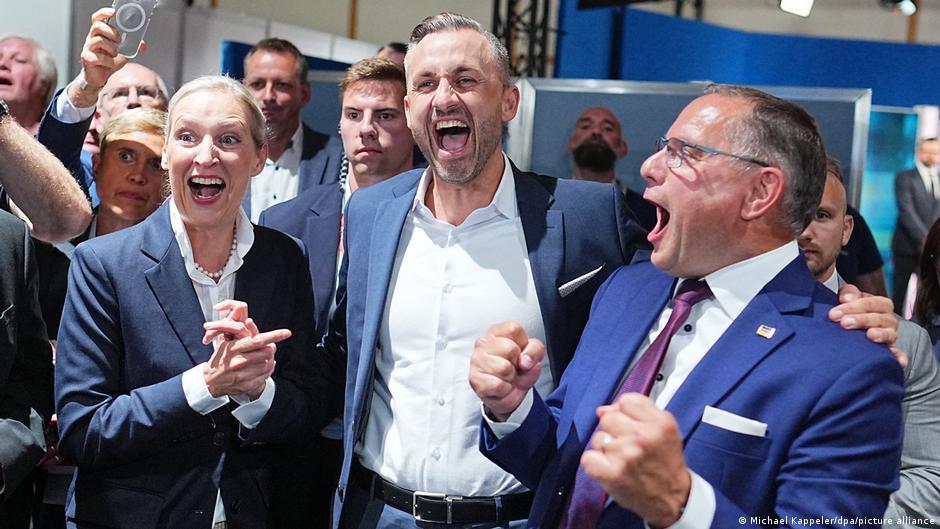
On September 6, the eastern German state of Saxony-Anhalt held its regional parliamentary elections, where the Alternative for Germany (AfD) party achieved a landslide victory with 43.8% of the votes. This marks a new record for the party and has caused concern among many in Germany. Although the win was significant, the fact that the party did not secure an absolute majority means the political situation in the state remains unclear, and negotiations on forming a government are expected to continue.
Christian Ludwig Friedrich Merz, the German Chancellor from the Christian Democratic Union (CDU), described the results as "deeply shocking," noting that the change was not limited to Saxony-Anhalt but extended across all of Germany. The CDU party saw a sharp decline in the state, with its share dropping from 37.1% in the 2021 elections to only 17.2% in the current 2026 elections.
In the Mecklenburg-Western Pomerania state elections held two weeks later on September 20, the CDU party failed for the first time to enter parliament, securing only 4.9% of the votes, while the AfD list topped the polls again with 38.2%. In Berlin, the left-wing Social Democratic Party won the elections to govern the German capital, with the AfD finishing third and the CDU second.
These elections clearly demonstrate a growing popularity for extremist parties at both ends of the political spectrum in Germany, raising concerns given the country's history with extreme right-wing and left-wing governments. Opinion polls show that 18% of Germans are worried about the rise of extremism, while 82% believe the country is heading in the wrong direction.
Analysis & Context
From an analytical perspective, these results point to a phenomenon of "emotional polarization," where political opponents become enemies, threatening democratic stability since parliamentary work requires mutual respect between parties regardless of differences. Additionally, "ideological polarization" emerges when society divides over different priorities such as migration versus the climate crisis, making it difficult to find common solutions amid a "compound crisis" combining multiple challenges.
In the broader context, German politicians face a difficult dilemma: voters expect them to address their problems seriously, yet the simple solutions offered by extremist parties attract support while democratic parties fail to satisfy everyone due to the complexity of intertwined issues. Researchers argue that politicians must acknowledge citizens' problems and demonstrate understanding as a first step in building trust, much like a doctor treating a patient suffering from genuine pain.
Studies indicate that feelings of neglect or being forgotten lead people to support extremist parties offering simplified answers to complex problems, increasing polarization and reducing trust in existing democratic institutions. The Ipsos Institute noted that concern about extremism is not just a passing opinion but reflects deep-seated trends in German society regarding the country's future.
The News
On September 6, the eastern German state of Saxony-Anhalt held its regional parliamentary elections, where the Alternative for Germany (AfD) party achieved a landslide victory with 43.8% of the votes. This marks a new record for the party and has caused concern among many in Germany. Although the win was significant, the fact that the party did not secure an absolute majority means the political situation in the state remains unclear, and negotiations on forming a government are expected to continue.
Christian Ludwig Friedrich Merz, the German Chancellor from the Christian Democratic Union (CDU), described the results as "deeply shocking," noting that the change was not limited to Saxony-Anhalt but extended across all of Germany. The CDU party saw a sharp decline in the state, with its share dropping from 37.1% in the 2021 elections to only 17.2% in the current 2026 elections.
In the Mecklenburg-Western Pomerania state elections held two weeks later on September 20, the CDU party failed for the first time to enter parliament, securing only 4.9% of the votes, while the AfD list topped the polls again with 38.2%. In Berlin, the left-wing Social Democratic Party won the elections to govern the German capital, with the AfD finishing third and the CDU second.
These elections clearly demonstrate a growing popularity for extremist parties at both ends of the political spectrum in Germany, raising concerns given the country's history with extreme right-wing and left-wing governments. Opinion polls show that 18% of Germans are worried about the rise of extremism, while 82% believe the country is heading in the wrong direction.
From an analytical perspective, these results point to a phenomenon of "emotional polarization," where political opponents become enemies, threatening democratic stability since parliamentary work requires mutual respect between parties regardless of differences. Additionally, "ideological polarization" emerges when society divides over different priorities such as migration versus the climate crisis, making it difficult to find common solutions amid a "compound crisis" combining multiple challenges.
In the broader context, German politicians face a difficult dilemma: voters expect them to address their problems seriously, yet the simple solutions offered by extremist parties attract support while democratic parties fail to satisfy everyone due to the complexity of intertwined issues. Researchers argue that politicians must acknowledge citizens' problems and demonstrate understanding as a first step in building trust, much like a doctor treating a patient suffering from genuine pain.
Studies indicate that feelings of neglect or being forgotten lead people to support extremist parties offering simplified answers to complex problems, increasing polarization and reducing trust in existing democratic institutions. The Ipsos Institute noted that concern about extremism is not just a passing opinion but reflects deep-seated trends in German society regarding the country's future.