Sourced fact
The News
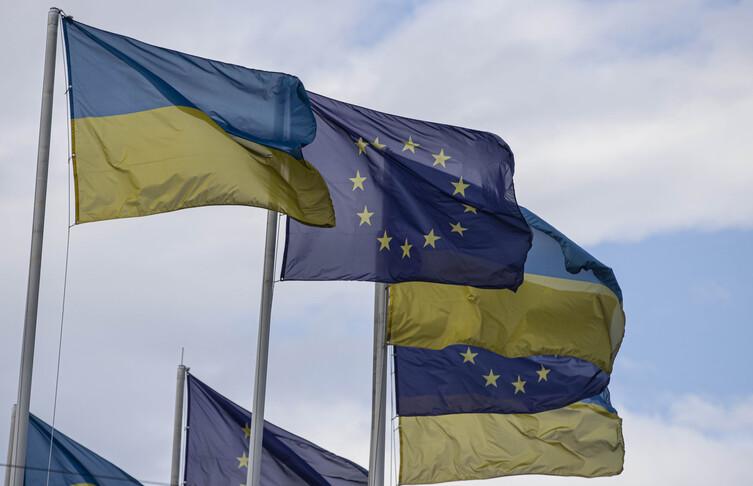
Foreign ministers from France, the United Kingdom, and Denmark called on Russia to immediately end its war against Ukraine during a session of the UN Security Council, warning that Russia's multiple attacks constitute a widespread security threat to Europe. According to Anadolu Agency, the three ministers urged Moscow to stop acts of sabotage, cyberattacks, and airspace violations that are raising growing concern across the European continent.
French Foreign Minister Jean-Noël Barrot stated that Russia is using winter, cold, and the theft of basic needs as destructive weapons targeting civilians, considering that Moscow is striking all of Europe through assassination, sabotage, and cyber operations. He also pointed out that the recurrence of airspace violations in Romania, Poland, Moldova, Lithuania, Estonia, Latvia, and Finland means there is no single state yet unaffected by Russian aggression, reminding everyone also of a recent incident in the German city of Leipzig.
On his part, UK Foreign Secretary Ed Miliband described the sham elections in occupied Ukrainian territories as an outright violation of Ukrainian sovereignty, affirming that NATO remains a defensive alliance and will not stop confronting Russian hostile activity. He indicated that it is time to inform President Putin of the facts, noting that the Russian people feel their country's failure in the war, expressing his refusal to change borders by force.
In turn, Danish Foreign Minister Lars Løkke Rasmussen stated that if Russia stops fighting, it means ending the war, whereas if Ukraine stops fighting, it would completely end the conflict, warning of a vicious cycle of escalation with targeting of civilian and energy infrastructure before winter arrives. He also warned that attacks on Ukrainian ports and agricultural infrastructure threaten global trade and food supplies, considering Germany's support for hybrid smuggling at Leipzig-Halle airport as another dangerous act affecting Europe.
The three ministers concluded by linking the war to wider security risks across Europe, calling for continued diplomatic and economic pressure on Moscow to force it to sit at the negotiation table, while emphasizing continued financial and security support for rebuilding Ukraine and implementing strict sanctions on Russia.
Analysis & context
Analysis & Context
From an analytical perspective, this meeting at the UN Security Council represents a critical moment where diplomatic warnings are transforming into direct security warnings regarding hybrid threats launched by Russia. The ministers' linking of airspace violations with cyberattacks indicates a shift in the nature of the conflict from merely a traditional land war to a comprehensive threat to Europe's digital and physical infrastructure.
In the broader context, UK Foreign Minister highlights the historical roots of the Western alliance by mentioning his family's story as refugees during World War II, thereby reinforcing NATO's defensive stance legitimacy. Additionally, the focus on supporting Ukraine during winter reflects an awareness that the winter season could be decisive in the conflict's trajectory due to civilians' dependence on energy and food.
The continued call for economic and diplomatic pressure through European sanctions is part of a long-term strategy aimed at forcing Moscow to return to the negotiation table. Linking the attack on Ukraine to wider risks to Europe's security illustrates that the continent's stability depends directly on the outcome of this major geopolitical conflict.
Finally, the warning against a "vicious cycle of escalation" indicates that any lapse in caution could lead to catastrophic consequences involving critical infrastructure, making preventive diplomacy an urgent necessity for European countries trying to avoid a wider war.