Sourced fact
The News
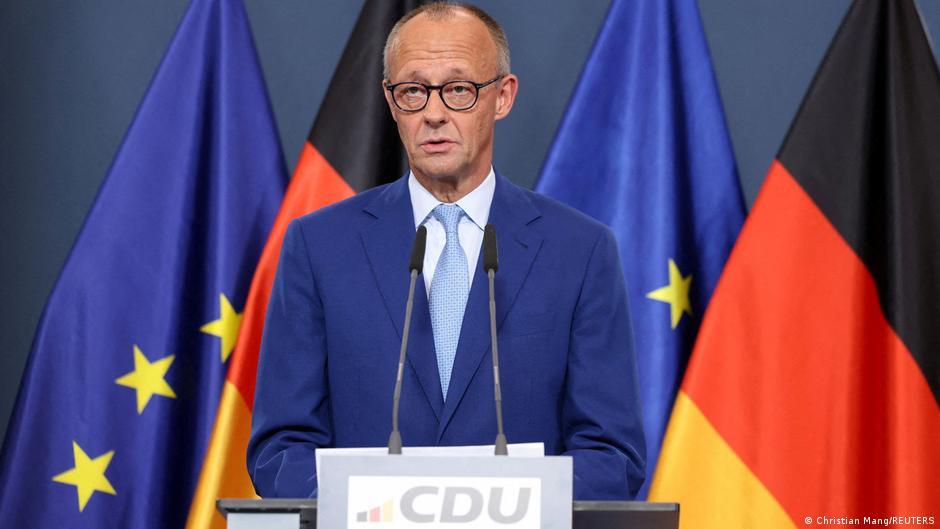
Far-right parties announced strong and surprising results in Germany's local council elections. The Alternative for Germany (AfD) topped the party list in the state of Mecklenburg-Western Pomerania for the first time since World War II. According to Deutsche Welle, citing the German news agency DPA, the far right won Mecklenburg-Western Pomerania by a narrow margin ahead of the Social Democratic Party (SPD), which had been part of the federal government under Friedrich Merz.
In Berlin, the Left party took first place, edging out Friedrich Merz's Christian Democratic Union (CDU), placing his governing coalition under immense pressure. Daniel Peters, leader of the CDU in Mecklenburg-Western Pomerania, resigned after his party failed to cross the five-percent threshold required to enter the state parliament. Philipp Amthor temporarily assumed leadership of the party in the state; he had previously served as deputy chairman locally and was a prominent figure in the national Christian Democratic Union youth wing.
On his part, AfD leader Alexander Gauland stated that his party would not join the state government despite its electoral victory, asserting it would play the role of strong opposition. He called on the three left-wing parties to form a three-party alliance comprising the Social Democrats, the Left, and the Greens to ensure parliamentary majority.
Former Chancellor Angela Merkel expressed deep concern over these results, urging the Christian Democratic Union to return to its roots as an inclusive party building bridges between different segments of society. She emphasized that the party must be comprehensive, speaking to everyone while upholding core values, citing Chancellor Konrad Adenauer's lesson in building bridges between workers and employers, and among religions and generations.
Analysis & context
Analysis & Context
Analytically, these results indicate a fundamental shift in Germany's political landscape, where the traditional ruling bloc loses its dominance to far-right and left-wing parties. This decline poses a significant challenge to the federal government led by Friedrich Merz and raises questions about the stability of the governing coalition and the future of economic and social reform policies in the country.
In a broader context, these elections reflect growing political polarization in Western Europe and public opinion influenced by economic issues such as inflation and cost of living, alongside security concerns and migration. These factors have driven far-right parties to achieve major electoral gains at the expense of traditional parties that failed to offer convincing solutions to the cost-of-living crisis.
The AfD's victory in Mecklenburg-Western Pomerania is a historically significant event reflecting changed political balances in former East Germany, where the Christian Democratic Union previously suffered from sharp weakness compared to other states. This shift may open the door to reshaping parliamentary alliances at local and regional levels, affecting development policies and social welfare in these areas.
Finally, Angela Merkel's call to build bridges and learn from German history points to an urgent need to redefine the political identity of the Christian Democratic Union and adapt it to new developments. This appeal may be part of a broader strategy to restore public trust and maintain the cohesion of Germany's political system in the face of increasing internal and external challenges.