Sourced fact
The News
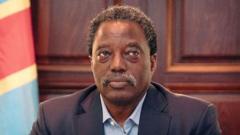
Former President of the Democratic Republic of Congo (DRC), Joseph Kabila, announced the formation of a new military alliance aimed at toppling the current government. According to the BBC, the coalition named itself the Front for the Rebirth of the Country (FRN) and is composed of former leaders from the M23 rebel group.
At a press conference held in Goma, the largest city in eastern DRC, Claude Ibalemba, a FRN advisor, clarified that the coalition's main goal is to end the "dictatorship" in the country. Ibalemba stated that the coalition will employ all means, including force, to achieve its objectives.
In the same context, the BBC reported that Kabila, who ruled the DRC from 2001 until January 2019, has levelled serious accusations against the current president, Felix Tshisekedi, charging him with corruption and authoritarianism in handling political and military opponents.
For his part, President Tshisekedi has not commented on the formation of this new coalition. However, analysts see this move by Kabila as an attempt to strengthen his influence in the country and broaden his support among military leaders opposed to the current government.
It is worth noting that Kabila was deposed in absentia on charges of treason by the Supreme Court of the DRC. Nevertheless, he continues to play a significant role in local politics, particularly through his support for rebel groups like M23.
In this context, Richard Moncrieff, an analyst at the International Crisis Group, said that Kabila is seeking to unify anti-government forces through this new coalition. He added that Kabila hopes to attract more important military leaders to his cause, thereby reducing M23's reliance on support from Rwanda.
On the other hand, Moncrieff believes that the likelihood of Kabila successfully taking control of the country as his father did in the 1990s has become less probable due to US sanctions imposed on him. According to Moncrieff, these sanctions reflect US support for the current DRC government.
These developments come at a critical time for the DRC, which is facing political and economic tensions and armed conflicts in the eastern part of the country, further complicating the political and social situation in the nation.
Analysis & context
Analysis & Context
From an analytical perspective, the formation of the FRN coalition demonstrates an increase in political tensions in the DRC. As reported by the BBC, Kabila aims to expand the rebellion and strengthen his power by attracting more Congolese military officers.
In a broader context, the DRC faces significant challenges due to ethnic conflicts and competition over natural resources in the eastern part of the country. As the BBC reports, Rwanda is accused of supporting M23 rebels, a claim Rwanda strongly denies.
It is also important to note that the US imposed sanctions on Kabila last May, signaling US support for the current DRC government. According to Crisis Group analysts, this development reflects the failure of peace negotiations and underscores the priority of territorial control by all sides.