Sourced fact
The News
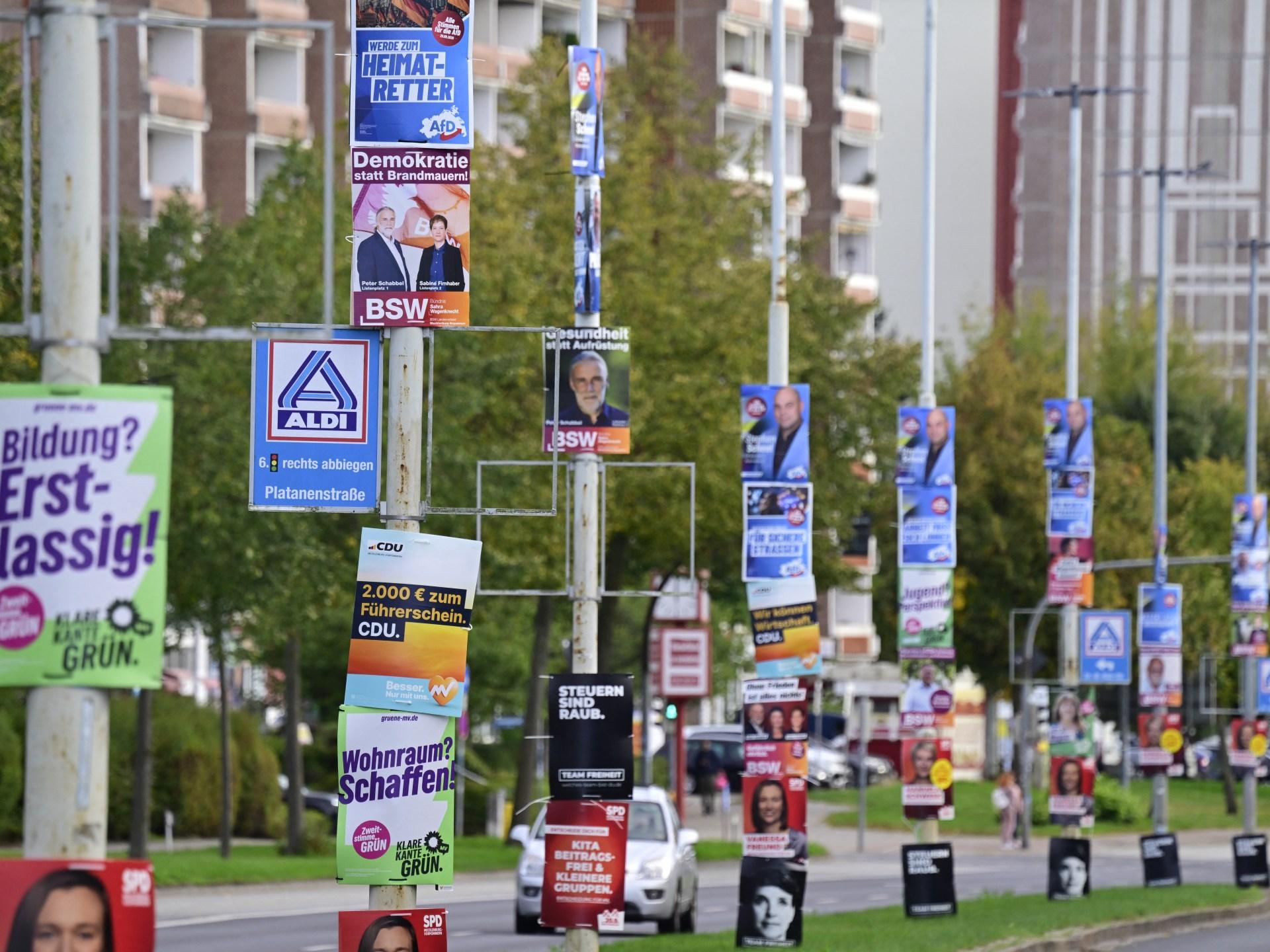
Left-wing and far-right parties achieved historic gains in the German state elections held on Sunday, with the "The Left" (Die Linke) list topping the political scene in the capital of Berlin with a clear victory, while the "Alternative for Germany" (AfD) list secured a landslide victory in Mecklenburg-Western Pomerania.
Preliminary results released Monday morning showed that The Left obtained 25.7% of the votes in Berlin, clearly ahead of Chancellor Friedrich Merz and his conservative party, the "Christian Democratic Union" (CDU), which stalled at 18.8%. In contrast, Alternative for Germany achieved approximately two-thirds of its results in Mecklenburg-Western Pomerania with 38.2% of the votes, while Merz's party collapsed to just 4.9%, marking his worst performance in his eighty-year history.
Despite The Left's victory in Berlin, they will need political alliances to take control of the mayor's office for the first time since German reunification in 1990. Meanwhile, Alternative for Germany party leader Tino Schöppala called on Chancellor Merz to resign, considering his statements about taking responsibility as mere weak words without taking decisive action.
Analysis & context
Analysis & Context
Analytically, these results are evidence of the deep fragmentation in the German political landscape, where votes have split between two extreme parties dominating the electoral map in different states. Mecklenburg-Western Pomerania, traditionally a Left-wing stronghold, has transformed into a strong base for the far-right Alternative for Germany party, indicating a fundamental shift in social and economic trends in East Germany.
In the broader context, Chancellor Friedrich Merz faces increasing pressure after his own party described the Mecklenburg results as a "catastrophe." With public approval ratings dropping to around 14%, doubts are growing about his ability to lead the ruling coalition and implement the economic and social reforms he promises.
The rise of Alternative for Germany in East German states such as Mecklenburg and Saxony-Anhalt raises significant concern among political experts who see this success as a step toward winning the federal elections in 2029. Meanwhile, The Left's victory in Berlin reflects its continued historical roots among migrants and workers, while the decline of the Social Democrats (SPD) to their lowest level in decades poses a major challenge for their political allies.
Finally, these elections indicate that the German political system is undergoing a structural transformation that may reshape traditional alliances and put the future stability of government at risk, especially amid ongoing tensions over migration issues and economic policies.