Sourced fact
The News
The US midterms, in which Democrats secured a landslide victory, may open new horizons for improving trade relations between Canada and the United States, especially with American voters endorsing lower tariffs on trading allies. Ontario Premier Doug Ford described the outcome as "a win for Canada," stating he would have jumped into the streets out of joy, while polls indicated that 75% of US voters believe these tariffs have raised prices and burdened them. Although a swift lifting of these tariffs is not expected immediately, the political shift in Washington instills great hope for the resumption of trade talks between Ottawa and Washington, which had previously been stalled.
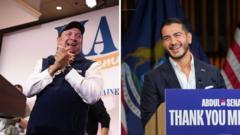
Tariffs were a decisive factor in election results in states such as Maine, Michigan, and Ohio, where Democrats defeated Republican candidates who either supported maintaining these tariffs or opposed them inadequately. In Maine, former Senator Susan Collins succeeded in pressuring for the removal of some tariffs on local products but lost her seat to Troy Jackson; meanwhile, Democrat Abdullah Al-Syed defeated Republican Mike Rogers in Michigan, a state whose manufacturing is heavily tied to the automotive sector and linked closely with Canadian industry. Elected Senator Sherrod Brown in Ohio described the tariffs as a "disaster" and pledged to reduce their cost to voters, while President Trump defended his ultimate authority to use veto power against laws he disapproved of despite Democratic victories in Congress.
Canada currently faces multiple layers of tariffs on sectors such as automobiles, steel, aluminum, and forestry, alongside bans on importing motorcycles, powdered milk proteins, and alcohol from the United States. Canada responded by imposing reciprocal tariffs worth 50% and banning the sale of American alcohol in most of its provinces, while Trump had threatened to increase tariffs on the automotive sector starting January 1st. However, it appeared that the US administration became more sensitive toward these tariffs before the election, with President Trump stating a trade deal was "very close" after speaking with Canadian Prime Minister Mark Carney, who described the American side's negotiators as offering more while asking for less.
Although Canadian Trade Minister Dominic Leblanc considered that election results would not change things in the short term, experts see that Canada now holds significant leverage due to US voters' anger over these tariffs. Former Canadian Ambassador Colin Robertson noted that Trump might feel greater pressure to sign a deal before January when new Democrats are seated in Congress, especially given his potential distraction by investigations into his family and administration later on. Additionally, US Trade Representative Jamieson Greer pointed to his ambition to conclude temporary agreements with Canada and Mexico before year-end under the umbrella of the United States-Mexico-Canada Agreement (USMCA).
Analysis & context
Analysis & Context
From an analytical perspective, BBC News indicates that President Trump may feel increased pressure to sign a deal with Canada now that US voters have clarified their dissatisfaction with his trade policies, particularly since tariffs are widely unpopular across the United States.
It appears there is an ideal window between now and January when new Democratic members of Congress will be seated to finalize the deal, while President Trump's attention could be diverted by investigations that Democrats might launch against his family, financial assets, and administration members.
In the broader context, multiple layers of tariffs currently exist on Canada in sectors such as automobiles, steel, aluminum, and forestry, alongside bans on importing motorcycles, powdered milk proteins, and alcohol from the United States.
Canadian Prime Minister Mark Carney stated that American negotiators are asking for less and offering more in recent talks, while confirming that Canada is prepared to wait for a new US President if necessary to reach an agreement with the United States.