Sourced fact
The News
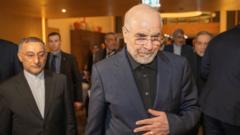
Iran's chief negotiator stated that American voters voted "no to war" following the Republican Party's defeat in the midterms, while President Donald Trump confirmed that poor election results were partly due to the war and rising fuel prices. Mohammed Bagher Ghalibaf, spokesperson for the Iranian Parliament, said the United States will pay the price of its betrayal of its people's wishes if it continues to support mercenaries and threats, warning that Iran's refusal to go to war will come accompanied by a "nightmare."
In separate statements with Fox News, Trump admitted that part of the election results was linked to Iran, but he confirmed he did not regret the joint attack with Israel in February. He also told CBS News that the conflict would end only when he says it has ended, warning of a return to full-scale war if an agreement with Iran is not reached after the elections.
On his part, Iranian Supreme Leader Majtaba Khamenei said that a change in US policy was unlikely and that any expectation of a change in US hostility toward the Iranian people was a gross error. He added that resuming the war would have much wider dimensions, while BBC Verify agency refuted Revolutionary Guard claims about four oil tankers sinking after colliding with sea mines in the Strait of Hormuz.
Tasnim semi-official agency also stated that the Islamic Revolutionary Guard hit two of the four tankers with fire while two additional tankers were intercepted, while the British Maritime Operations unit denied similar reports and confirmed there were no casualties in a collision incident off Oman's oil project. In another development, the Guard announced the shooting down of an American MQ-9 drone over the strait, which coincides with reports of limited military strikes by US forces on Iran's Qeshm Island.
President Masoud Peerzakhkan of Iran said his government is seeking to resolve the crisis through dialogue and that no one will benefit from resuming the war, confirming that the Supreme Leader has granted the government authority to negotiate issues previously considered outside its jurisdiction. Ismail Baghi, spokesperson for the Iranian Ministry of Foreign Affairs, said that the basis for indirect negotiations taking place via Qatar is an Iranian seven-point proposal that was shortened for implementation in two days.
It should be noted that the Strait of Hormuz, through which one-fifth of global oil and gas shipments pass, has been effectively closed since the start of the war due to Iranian attacks on commercial ships and US naval blockades. Iran continued to demand control over part of the waterway and began targeting ships using the southern route via Omani waters to avoid its preferred route, while the US military provides protection for tankers to ensure continued exports from Gulf Arab countries.
Analysis & context
Analysis & Context
From an analytical perspective, Trump's statements imply a tacit admission that the war weighed heavily on American voters by raising gasoline prices, which may explain part of the electoral losses faced by his party. This admission comes in the context of indirect negotiations that have been stalled for months, where the Iranian government led by President Masoud Peerzakhkan attempted to resolve the crisis through dialogue by granting additional authority to the Supreme Leader for negotiation.
In the broader context, the Strait of Hormuz remains a vital artery through which one-fifth of global oil and gas shipments pass and has been effectively closed since the start of the war due to Iranian attacks on commercial ships and US naval blockades. The region faces escalating tensions with reports of fires in oil tankers after colliding with sea mines, while BBC's verification body refuted these claims due to lack of sufficient evidence.
Reports also indicate continued military tension with Iranian forces claiming the shooting down of American drones and bombing of Qeshm Island, reflecting the continuity of the conflict despite international calls to end the war. The region appears to remain in a highly fragile state as major powers vie over the future of regional security and global energy sources.