Sourced fact
The News
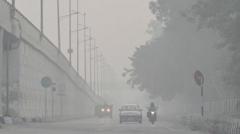
Delhi is facing another acute air pollution crisis as winter arrives, with the Air Quality Index (AQI) exceeding 300 and entering the "very poor" category, according to BBC News. This deterioration raises significant health concerns for millions of residents, as breathing in such polluted air for extended periods can cause respiratory problems and exacerbate chronic diseases in children and the elderly.
In response to these crises, authorities announced the activation of Stage 2 of the Graded Response Action Plan (GRAP), aimed at reducing dust, vehicle emissions, and other pollution sources. These new measures include intensive street cleaning, increased parking fees to encourage public transport use, adding 20 additional train services on weekdays, adjusting government working hours to reduce traffic congestion, based on forecasts that air quality will remain poor in the coming days.
This crisis coincides with the approaching Diwali, one of India's largest festivals, celebrated by setting off fireworks that release fine particles and harmful gases into the atmosphere. The causes for this sharp rise in pollution are a mix of vehicle exhausts, industrial emissions, low temperatures, weak wind speeds, plus crop residue burning in neighboring Punjab and Haryana states, which transported smoke clouds toward the capital.
In an attempt to tackle the worsening pollution before the celebration, India's Supreme Court permitted the manufacturing, sale, and use of approved green fireworks for a limited period only during Diwali holidays, with strict restrictions on firing times and prohibiting fireworks within 300 meters of hospitals and schools. However, authorities face a significant challenge in ensuring only approved fireworks are sold; the court noted that traditional fireworks continue to be sold despite the complete ban, ordering police to monitor sales areas, check QR codes, and confiscate any illegal fireworks.
Analysis & context
Analysis & Context
From an analytical perspective, Delhi's air pollution crisis is not merely a seasonal phenomenon but rather a cumulative result of complex geographical and industrial factors, including factory emissions and agricultural waste burning in neighboring regions. This area ranks among the most polluted in the world regarding air quality, where pollutants accumulate due to terrain characteristics and lack of sufficient winds to disperse them, making the situation critical especially in winter when temperatures drop and atmospheric movement ceases.
In a broader context, Diwali represents a significant challenge for Indian politicians and decision-makers given its deep cultural connection to firecracker rituals that conflict with modern environmental standards. Despite legal and judicial efforts by the state to enforce less polluting types, implementation on the ground faces major obstacles related to public awareness and difficulties in effectively monitoring informal markets, making it extremely difficult to balance traditional celebration with preserving public health.
It is also worth noting that this issue is not limited to Delhi alone but has extended to other cities like Mumbai, which recorded high pollution levels recently before seeing relative improvement thanks to coastal winds. This situation demonstrates how air pollution in India has become a nationwide comprehensive issue requiring integrated solutions involving cooperation between different states and greater coordination among judicial and executive bodies to ensure the effectiveness of adopted measures.