Sourced fact
The News
Residents of a central camp in Comoros, located near Bab el-Mandeb, are facing a new wave of displacement for Yemenis who have fled the ongoing war between the Houthis and Saudi-backed forces. More than 3,000 refugees arrived at this joint government and United Nations camp in recent days, bringing the total number of displaced persons in Yemen to over 120,000 due to the sharp escalation of fighting along the Red Sea coast.
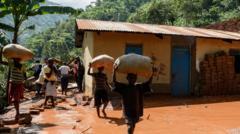
Ibrahim Issa, a fisherman from the Yemeni city of Zabab, explains his reasons for migration by stating that the sounds of aircraft and children's screams were the main drivers for fleeing to protect his children from terror. He notes that families arriving carry what they own in terms of simple furniture, such as hookah pipes or goats, while others arrive loaded only with their clothes after crossing the sea under difficult conditions.
Fighting is currently taking place around the strategic Bab el-Mandeb area, where the Houthis launched a rapid attack toward the coast, while Saudi Arabia responded with hundreds of air strikes. The Houthis also fired hundreds of drones and missiles at cities in southwestern Saudi Arabia's desert regions. Camp residents confirm that they do not care who is launching the attacks but fear the shells falling around them regardless of who executes them.
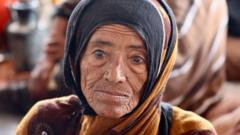
Qasim Abrahim Abasi, a fisherman whose ID card lists his age as 100 years old, states that aircraft sounds prompted his family to flee to protect their children's lives amidst indiscriminate shelling. Muhammad Abd al-Larim, a former guide from Aden living in the camp since 2015, adds that he weeps over the suffering of new refugees and hopes international organizations and the Djiboutian government will listen to their voices.
Residents conclude their statements by emphasizing their desire to return if peace returns to their country, noting that their current lives depend on staying in Djibouti where they find safety away from the war front that has persisted since 2014 and claimed tens of thousands of lives.
Analysis & context
Analysis & Context
From an analytical perspective, this mass displacement reflects the massive security deterioration Yemen has faced since 2014, when the country transformed into a full-scale battlefield affecting millions of civilians. Although a weak ceasefire was signed in 2022 between the Houthis and Saudi Arabia, it completely collapsed over recent months with the escalation of missile exchanges, drone attacks, and air raids.
In the broader context, Djibouti emerges as a small country located at a vital strategic position near Yemen, hosting large American and Chinese military bases since 2003. Despite its unwillingness to engage in the Yemeni war, it is receiving an increasing number of refugees due to the military escalation threatening the stability of the entire region.
The Bab el-Mandeb Strait is a critical maritime choke point connecting the Red Sea with the Indian Ocean's west, making any disturbance there directly impact Saudi oil exports and regional security. Furthermore, the continuation of the war in Yemen still carries enormous human costs exceeding official figures and affecting the future of coming generations.
Finally, the refugees' situation in camps reflects their strong desire to return to their homeland if peace returns, but reality indicates they prefer staying in Djibouti where they find temporary protection away from the continuous shelling danger in Yemen.