Sourced fact
Today's top world stories
Today witnessed a variety of events, including a temporary ceasefire in the Ukrainian city of Kherson amid fears of renewed attacks, and new U.S. sanctions imposed on Rwanda for supporting rebels in the Democratic Republic of the Congo. Meanwhile, European Commission President Ursula von der Leyen chaired the Montreal summit to strengthen partnership with Canada, while Ethiopia received Russian fighter jets as tensions escalated in Tigray.
Temporary Ceasefire in Kherson Amid Fears of Renewed Russian Attacks
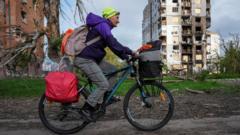
The Ukrainian city of Kherson regained calm thanks to a temporary ceasefire expanded by U.S. First Lady Melania Trump, allowing residents to enjoy a brief respite amid continued Russian shelling. A source working for the local government warned that Russia is using this lull to fortify its military positions and supply troops in preparation for a renewed attack starting next week, while Dmytro Lubyntsev, Ukraine's Human Rights Commissioner, described the city as "literally heartbroken" since Tuesday.
US Sanctions on Rwandan Defense Ministry Over Support for Congo Rebels
The United States imposed new sanctions on Rwanda's Ministry of Defense, accusing it of supporting rebel forces in eastern the Democratic Republic of the Congo, thereby increasing pressure on Kigali to withdraw its troops and halt support for rebels. Washington accuses Rwanda of directing thousands of soldiers to fight alongside rebels and exporting more minerals than it produces because rebels have seized resource-rich areas, while the Congolese Ministry of Foreign Affairs condemned the new sanctions and called on Rwanda to fulfill its commitments.
European Commission President outlines new partnership vision with Canada at Montreal summit
European Commission President Ursula von der Leyen officially unveiled her vision for the future relationship between the European Union and Canada during the bilateral summit held in Montreal, Canada, where she proposed granting Canada a status known as "associated membership." The idea of "associated membership" faced some pushback from member states such as Germany, which regained its lobbying efforts to remove that term from the final statement draft, fearing it would grant Canada preferential treatment at the expense of other countries seeking accession.
Ethiopia Acquires Russian Su-35 Fighter Jets Amid Rising Tensions in Tigray
Ethiopia received 12 Su-35 fighter jets and advanced air defense systems from Russia today, coinciding with escalating clashes in northern Tigray region bordering Eritrea. Ethiopian Prime Minister Abiy Ahmed described this deal as a "milestone" that will significantly boost the country's defensive capabilities, noting that the agreement was reached years ago and that the aircraft arrived ahead of the agreed schedule.
Helicopter Crash in Uttarakhand During Thunderstorm Pilgrimage Season
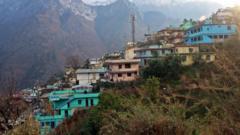
A helicopter carrying six people, including five pilgrims, crashed in Uttarakhand state in northern India after departing the Badrinath religious site on Friday amid heavy rains. Chief Minister Pushkar Singh Dhami stated that the helicopter fell near a village close to Joshimath in the Chamoli district, while rescue teams have been deployed to the mountainous area and the condition of the passengers remains unknown.
Australian Judge Rejects Appeal of Woman Convicted of Killing Three Relatives with Poisoned Truffle-Laced Food
The Victoria Court of Appeal in Australia rejected 52-year-old Erin Patterson's appeal to overturn her convictions for killing three relatives and attempting to kill a fourth, confirming she will never be released. The court upheld her life sentence with a non-parole period of 33 years as insufficient because it allowed the possibility of freedom, stating that Patterson's crimes were "exceptionally cold and calculated" and deserved the strongest condemnation.
Analysis & context
Reading the day's news
From an analytical perspective, these stories reflect global attention to regional security issues and the impact of international decisions on stability in conflict-affected states, as seen in the cases of Kherson, Rwanda, and Ethiopia. In a broader context, they highlight how major powers utilize sanctions and partnerships as tools of geopolitical pressure to shift power balances, whether through U.S. sanctions on Rwanda or the new partnership between the European Union and Canada. Regarding humanitarian and environmental crises, these news items shed light on the challenges faced by civilians in conflict zones like Kherson and natural disasters in India, reminding readers that crises are multifaceted and require comprehensive international responses.