Sourced fact
The News
The Ukrainian city of Kherson has returned to quiet for the first time in years thanks to a temporary cease-fire that First Lady Melania Trump expanded its scope, allowing residents to enjoy a rare moment of calm amidst continued Russian shelling. Video clips posted on social media showed people walking through streets covered with anti-drone nets and gathering in public squares—activities they had previously only been able to do under constant vigilance against drones.
Dmytro Lybints, Ukraine's Commissioner for Human Rights, confirmed that the city "mourned literally" since Tuesday, as people went out calmly to enjoy the autumn breeze while residents described these moments as their greatest wish after years of living under constant threat. Conversely, a source working in the local government warned that Russia is using this lull to strengthen its military positions and supply its troops with weapons and drones in preparation for a renewed attack starting next week.
Petro Andriushenko, director of the Occupation Study Center in Ukraine, said Kherson residents noticed military buildup around Radnytsia, which gives the enemy an opportunity to exploit the truce for military purposes that could make the situation worse after the scheduled cease-fire ends on Sunday. Nevertheless, Dymita, one of the residents, described this situation as "the first time the shells have stopped," where people go out to buy coffee and walk through streets without fear of certain death that mere presence in the red zone used to mean.
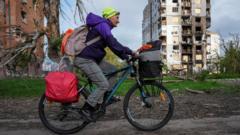
Russia is seeking to evacuate civilians from the neighboring village of Oleshky across the Dnieper River before the cease-fire ends, while dozens of residents returned to destroyed areas to retrieve their belongings or visit the graves of loved ones killed in drone attacks, such as Angela Dubrovalska's wife, who visited her husband's grave for the first time in two years. Kherson's population has dwindled from over a quarter million to about 65,000 since the start of Russia's full-scale invasion, while children and adults returned to visit their homes in areas previously considered uninhabitable.
Residents fear chaos will return on Sunday when the cease-fire ends, especially as Russian authorities are using the time to redeploy their forces and capability to launch more devastating attacks. Dymita said these few days showed how things could be if the conflict actually ended, while Olha described the ordinary life they are living now as a dream that was once out of reach for years of darkness and collapse.
Analysis & context
Analysis & Context
From an analytical perspective, this cease-fire represents a rarity in the context of a six-year war that will officially enter its sixth year in February next month, during which Kherson has become an active combat zone with schools and hospitals moved underground. The ability of residents to engage in daily activities such as shopping or visiting cafes is a significant psychological indicator, even though it does not guarantee sustained safety if the cease-fire ends without a permanent agreement.
In the broader context, observer reports indicate that Russia may use cease-fire periods as a tactical strategy to reorganize its defensive and offensive lines, which explains growing concern over the Oleshky area, considered a strategic gateway for controlling the left bank of the Dnieper River. The presence of American journalists monitoring the humanitarian operation could be an attempt by the West to demonstrate humanitarian progress while Russia hides its real military movements behind the veil of the truce.
Moreover, residents returning to "red zone" areas that were previously uninhabitable due to drone density and munitions reflects the suffering of civilians who lost their homes or found them burned or looted, highlighting the scale of human and material destruction left by the war. Angela Dubrovalska's visit to her husband's grave killed by a drone symbolizes the tragic humanitarian side that residents continue to endure even during temporary calm periods.
Finally, Kherson's population decline from over 250,000 to about 65,000 since the start of Russia's full-scale invasion illustrates the mass exodus due to continuous shelling, making any temporary cease-fire a precious opportunity to rebuild psychological trust despite the risks inherent in the continuation of the conflict. These brief moments of calm serve as a reminder of the need to seek lasting political solutions to prevent temporary truces from turning into new preparation periods for even more devastating military operations.