Sourced fact
The News
Commercial ships in waterways around the Strait of Hormuz are facing unprecedented attacks, according to the UK Maritime Trade Operations (UKMTO), which recorded attacks on 12 ships during the week of October 5 to 11, the highest weekly level since the start of the war between the US, Israel, and Iran. UKMTO stated that six ships were attacked in a single day, setting a new daily record.
According to UKMTO data, the increase in attacks has led to a decline in oil shipments through the strait. Oil exports from the Middle East dropped to approximately 12.6 million barrels per day on October 13, compared to 15 million barrels at the end of September. This decline is attributed to Iran's policy aimed at increasing its control over the waterway.
Martin Kelly, CEO of Orbital Risk Intelligence, noted that "Iran has developed its strategy" in response to challenges to its control over the strait. He added that Iran's objective is to "prevent ships from passing and deter others." The Islamic Revolutionary Guard Corps in Iran announced that attacks will not be limited to the strait but will extend to a wider area in the region.
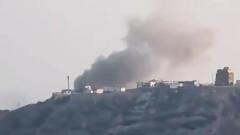
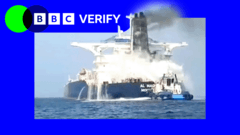
On Sunday, the oil tanker "Petro Dolphin" was struck by a drone off the coast of Oman, leading to a fire on the vessel. Eleven crew members survived while two remain missing. Another tanker was also struck later in the week in the same strait, resulting in its sinking.
Additionally, reports indicate that Iran is carrying out attacks far from the Strait of Hormuz, including an attack on a tanker north of Qatar and another off the coast of Ajman in the United Arab Emirates. This development suggests that Iran is seeking to expand the scope of its offensive operations to broader areas in the region, increasing risks for maritime shipping.
Analysis & context
Analysis & Context
Experts suggest that Iran is carrying out these attacks to assert its control over the waterway amid an increase in the number of ships transiting south of the strait under US military protection. Experts also note that Iran is carrying out attacks on ships far from the Strait of Hormuz.
In a broader context, the decline in oil exports is having a direct impact on the global economy, given the strategic importance of the Strait of Hormuz for oil transport. Furthermore, the increase in attacks is escalating tensions in the region, affecting maritime freedom and global trade movements.
It is also noteworthy that the US is providing protection for ships transiting the strait, helping to maintain the flow of trade despite the attacks. This US military intervention underscores the strategic importance of the strait to the world.