Sourced fact
The News
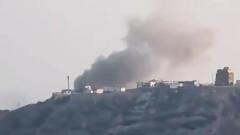
The city of Aden in southern Yemen witnessed a missile attack by the Houthi rebels targeting the presidential palace of al-Maashiq, resulting in the deaths of five people and injuries to 16 others, according to officials. Yemen's Minister of Information, Maamoon Abu-Risha, stated that the prime minister and other ministers were unharmed when five ballistic missiles hit the palace.
For his part, the Houthi military spokesman Yahya Sari said that the attack targeted the "military operations headquarters of the Saudi enemy in Aden." Aden serves as the headquarters for the internationally recognized government, which is supported by the Saudi-led coalition and has been conducting airstrikes on Houthi positions in northern Yemen.
The Yemeni Minister of Health, Qasim Bin Habeeb, noted that the victims included security personnel and civilian workers. The Prime Minister, Shaykh Saeed, condemned the attack, calling it a "cowardly act" and a "continuation of their criminal behavior." He also affirmed that the government would continue its duties and that its forces would not retreat from confronting the Houthis on Yemen's southern and western fronts.
In this context, the Houthi group previously denied launching an attack on Saudi Arabia after the coalition announced the interception of a cruise missile in the holy city of Medina. Saudi Arabia accused Iran of supporting and arming the Houthis, claiming that this action violates UN Security Council resolutions. In response, Iran's Minister of Foreign Affairs stated that his country is ready to provide any necessary assistance to initiate talks between Saudi Arabia and the Houthis, but denied providing weapons to the Houthis.
Since 2014, Yemen has been experiencing a civil war between the internationally recognized government and the Houthi militias, which have taken control of the capital, Sanaa. The conflict escalated significantly in 2015 when Saudi Arabia and its allies launched a military campaign to restore the government. However, an unofficial ceasefire that began in July of this year has started to break down, with the Houthi group announcing a maritime blockade on Saudi Arabia and launching missile and drone attacks on Saudi airports and oil facilities.
These tensions have led to an increase in global oil prices, particularly after the recent attack on Riyadh airport, which resulted in 13 deaths. According to Yemen's Ministry of Health, more than 1,282 people were killed and over 5,890 were injured since August, while the UN reported that 201,000 people have been displaced due to the violence and a worrying outbreak of cholera.
Analysis & context
Analysis & Context
From an analytical perspective, the recent missile attack reflects a worsening of the conflict between the internationally recognized government and the Houthi group in Yemen. In a broader context, tensions continue between Saudi Arabia and Iran, with Saudi Arabia accusing Tehran of militarily and politically supporting the Houthis. This escalation also highlights the security challenges faced by the Gulf in light of repeated attacks on critical infrastructure in Saudi Arabia. Meanwhile, the conflict in Yemen continues to impact civilians, with an increase in cholera cases and the displacement of thousands from their homes.