Sourced fact
The News
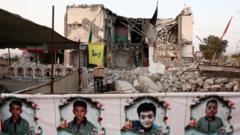
UN human rights experts have confirmed there are reasonable grounds to believe that the United States committed war crimes during two attacks on Iran that killed at least 177 civilians. This was stated in a new report by the Independent International Commission of Inquiry on Iran, which described the missile strikes launched by US forces in February/February on an elementary school and a sports complex as indiscriminate attacks causing massive loss of life and destruction of civilian infrastructure.
The mission stated that experts determined US responsibility for the first attack in Minab based on available evidence, including media reports indicating that US forces were the only party possessing Tomahawk cruise missiles used in the strike. Experts also clarified that the school was clearly identifiable and not used for military purposes, and that the damage was not caused by a missile malfunction but was the direct target of an attack that struck the building twice, according to eyewitnesses.
In the second attack on a sports complex in Lamerd, experts concluded there are reasonable grounds to believe the US carried out the strike using precision-guided missiles possessed only by the US side in the conflict. The US military denied conducting any attacks on Lamerd that day and refuted reports identifying the missile type used, while the Biden administration did not accept the mission's findings and stated its reports are not credible.
Separately, the report revealed that Iranian authorities committed crimes against humanity during their suppression of a widespread popular uprising witnessed in January/January 2026 through the use of unprecedented lethal force across all provinces of the country. Experts indicated that security forces targeted healthcare facilities and arrested staff, preventing victims from receiving life-saving medical care; tens of thousands of detainees died or were subjected to torture and solitary confinement and denial of legal representation.
The international mission also warned that Iranian civilians are caught between two forbidden zones, facing serious human rights violations by their own government while simultaneously being exposed to the deadly conflict with the US and Israel. Sources estimated that the actual number of deaths in the suppression of protests was far higher than the official figure provided by the government, which reached 3,000 people, while an active US human rights agency confirmed over 7,000 killed, most of them protesters.
Analysis & context
Analysis & Context
From an analytical perspective, this report represents a major diplomatic and legal turning point, as independent UN experts bring serious violations before the Human Rights Council, placing both the US and Iran in a defensive position before the international community. Classifying attacks on schools and sports facilities as war crimes redefines the nature of the current conflict not merely as a traditional military dispute but as an illegal war under international humanitarian law standards.
In the broader context, the report highlights the severe deterioration of the human situation within Iran, where popular protests have turned into a wave of brutal suppression targeting isolated civilians and vital institutions such as hospitals. This escalation indicates a breakdown in the internal social contract and the state's use of "national security" as an excuse to justify serious violations of citizens' basic human rights.
Furthermore, the report highlights the contradiction between both parties' claims regarding the nature of weapons used and responsibility for strikes, reflecting the complexity of the geopolitical landscape in the region amid mutual escalation between Iran and its allies on one hand, and the US and Israel on the other. The inability of parties to reach agreement on field facts deepens the trust gap and complicates any future negotiation or ceasefire efforts.
Finally, these human rights reports add a new layer of diplomatic and economic pressure on both sides; condemnation of war crimes and crimes against humanity could lead to new international sanctions or legal proceedings before international courts, fundamentally altering the dynamics of the conflict.