Sourced fact
The News
Uganda has begun withdrawing its military forces from Somalia after nearly two decades of military participation in the country. It confirmed that the first batch of troops has already returned home, with expectations that other groups will follow in the coming days. This phased withdrawal aims to end Ugandan military operations in the Horn of Africa by the end of 2027, including those operating under the African Union Mission (AMISOM).
Ugandan military spokesperson Krist Magizi clarified that all forces, including those affiliated with the AU Mission, will depart the country as part of a pre-planned withdrawal plan. He indicated that this event will mark the end of Uganda's operations in Somalia, with expectations that the Somali government will assume full responsibility for security in its territory.
This decision came following last week's meeting between Somali President Sheikh Mohammed and Ugandan President Yoweri Museveni in Kampala to discuss the security situation and economic relations between the two countries. Reports indicate that the Somali president attempted to persuade Uganda to delay its withdrawal, but the Ugandan side adhered to the withdrawal plan announced by the head of the Ugandan army, General Muhoozi Kainerugaba.
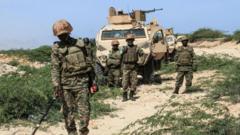
Currently, about 4,500 soldiers from the African Union forces are deployed in Somalia, alongside approximately 2,000 Ugandan troops deployed under bilateral agreements. Ugandan forces have played a pivotal role since 2007 in driving out the Al-Shabab group from Mogadishu and other major cities, fighting alongside the Somali National Army to reclaim strategic territories.
The future of the new AUSSOM mission, which has succeeded previous AU missions in the country, faces financial uncertainty amid plans to reduce American and United Nations support. A one-year transition plan begins in January to give Somalia and the African Union sufficient time to seek alternative funding sources to ensure the continuity of security support.
Analysis & context
Analysis & Context
From an analytical perspective, this withdrawal represents a major strategic shift in the security dynamics of the Horn of Africa, as security responsibility gradually transitions from foreign forces to Somali national forces. The decision followed a series of diplomatic meetings aimed at strengthening bilateral cooperation and securing a stable future for the international mission in the region.
In the broader context, the African Union Mission in Somalia faces significant financial challenges with plans to cut American and UN support, necessitating the launch of a 12-month transition plan starting next January. This timing aligns perfectly with the Ugandan troop withdrawal schedule, reflecting wider regional coordination to restructure Somalia's security architecture.
Historically, Uganda played a unique role as a leading African state in counter-terrorism in the region, with its forces contributing directly to stabilizing Mogadishu and retaking key urban areas from Al-Shabab, an al-Qaeda affiliate. However, the prolonged presence of Ugandan troops has sparked debate over the sustainability of Somalia's security infrastructure and its ability to bear responsibility independently.
Experts indicate that the success of handing over security to Somalia depends heavily on the Somali government's ability to unite its ranks and confront internal and external challenges facing the country after more than two decades of ongoing conflict with extremist armed groups.