Sourced fact
The News
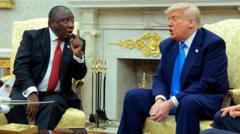
President Donald Trump has officially announced his intention to remove Rwanda and South Africa from the preferential trade program known as the "African Growth and Opportunity Act" (AGOA), with the implementation of this decision set to begin on January 1, 2027. This announcement follows Trump informing the U.S. Congress of his decision, claiming that a routine annual review uncovered practices in both countries that conflict with the eligibility requirements for the program, which allows the export of thousands of products to the United States duty-free.
U.S. Trade Representative Jamieson Greer stated in a press release that the administration has notified both countries of the decision, noting that the practices followed by these two nations do not align with program requirements. The U.S. administration focused its reasons for the decision on obstacles to American trade and investment, as well as concerns regarding national security and foreign political interests in the region.
Regarding Rwanda, Washington raised additional concerns related to human rights, pluralistic politics, the rule of law, and workers' rights. This announcement came just a week after the U.S. imposed sanctions on Rwanda's Ministry of Defense due to its alleged role in the armed insurgency in eastern the Democratic Republic of Congo, where the United States claimed to have directed thousands of soldiers to fight alongside M23 rebels.
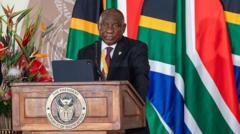
As for South Africa, the U.S. administration cited corruption as a primary reason for excluding it from the preferential trade program. Greer also noted that the administration is working to ensure its African partners take necessary steps to meet eligibility standards. U.S. Ambassador to South Africa Leo Brent Bozelle III described the decision to end the country's eligibility as an expected and preventable outcome resulting from the South African government's rejection of the genuine concerns raised by the U.S. side.
Analysis & context
Analysis & Context
From an analytical perspective, this decision represents a fundamental shift in U.S. policy toward its trade partnerships with Africa, moving from a model of mutual dependence to one that imposes strict political and security conditions as a prerequisite for maintaining economic relations. This trend shows that the trade program is no longer merely an economic tool but has become a platform for implementing a specific U.S. political agenda related to democratic values and national security.
In the broader context, tensions between Washington and several African nations are escalating due to differing views on issues such as human rights, corruption, and the rule of law. This incident points to a shift in power dynamics where the United States uses trade tools as instruments of political pressure to change the behavior of partner countries, which may spark debate over the fairness of these standards and their impact on developing economies that rely on exports.
This decision also reflects the continuation of American isolationism or what is known as "America First" under Trump, previously applied to immigration and trade policies with other countries. This measure could reshape the map of economic alliances in Africa, where excluded countries may seek new trading partners outside the scope of direct U.S. influence to compensate for expected economic losses.
Finally, this highlights the role of U.S. diplomacy in handling sensitive issues through official channels such as Congress and the Trade Representative, reflecting the complexity of decision-making processes in U.S. foreign policy. Linking security and economic issues in this context indicates an increasing interweaving of geopolitical interests and economic considerations in shaping contemporary international policies.