Sourced fact
The News
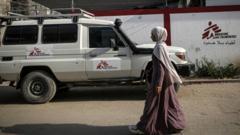
Doctors Without Borders warns of the collapse of Sudan's fragile healthcare system due to global funding reductions that have led to the closure of numerous medical facilities across the country. Mohamed Ibrahim, the organization's head in Sudan, pointed out that the war that erupted in April 2023 between the army and the Rapid Support Forces has created one of the most severe humanitarian crises ever, with more than 33 million people needing medical assistance.
Ibrahim stated that the cessation of US funding following the closure of USAID last year, coupled with reduced European aid, caused organizations dependent on these grants to run out of funds by June. The geographical isolation of frontline services places other hospitals under severe pressure due to the loss of operational capacity and the disappearance of medicines. In western Darfur, which witnessed most of the fighting over the past three years, admissions to facilities supported by the organization rose by 22.5% between January and April 2026 compared to the same period last year.
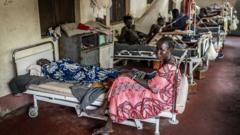
Sebastien Travickanti, emergency coordinator for the organization in western Darfur, explained that patients are forced to undertake long and costly journeys to reach treatment, often arriving in critical condition while hospitals are already full. In Tindaba camp in Gedaref state, which hosts 18,400 displaced persons, maternity and surgery departments were closed after a humanitarian organization left in June, forcing pregnant women needing surgical births to travel three hours to the nearest city.
The number of relief agencies operating in Am Ruquba camp also dropped from 35 agencies in 2021 to fewer than 10 currently, while the camp hosts approximately 17,000 people, mostly women and children. Les Harding, the humanitarian organization's representative in the UK, noted that without increased support, patient travel times will increase, treatment options will decrease, and the risk of arriving late for care will rise.
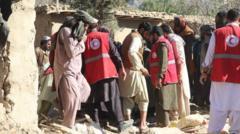
In another context, attacks on health workers continued; 1,620 people were killed in attacks on medical facilities in Sudan in 2025, representing 82% of all global deaths resulting from such attacks according to the organization. Despite expectations that international diplomats would reach the capital Khartoum for talks on ending the civil war, clashes continued as reported in North Kordofan state, where 11 people were killed in a drone attack on the military-controlled city of Am Ruquba.
Analysis & context
Analysis & Context
Analytically, the closure of medical facilities is not merely a result of temporary conditions but part of the erosion of Sudan's basic infrastructure, which has suffered from political and economic instability for years. Data indicates that reliance on external funding makes the healthcare system vulnerable to any geopolitical fluctuations or political decisions by donor countries, threatening the continuity of vital services such as childbirth and surgery.
In a broader context, the collapse of the health sector represents an existential threat to the civilian population displaced from their homes, where camps have become places suffering from a severe lack of basic medical services. The danger of the situation lies in the fact that closing primary clinics increases the burden on major hospitals that do not have sufficient resources to absorb the influx of patients, leading to increased mortality rates and deaths from treatable diseases.
Furthermore, the continued attacks on health workers and medical facilities complicate any efforts to repair the system or rebuild trust between civil society and actors in the conflict. There remains an urgent need for immediate international intervention not only to fund healthcare services but also to protect hospitals and their staff through international guarantees and a cessation of direct attacks on them.
Finally, the deterioration of the humanitarian situation worsens with the continuation of fighting and the lack of a clear horizon for the end of the conflict, making any attempt to repair the healthcare system without a comprehensive political solution nearly impossible.