Sourced fact
The News
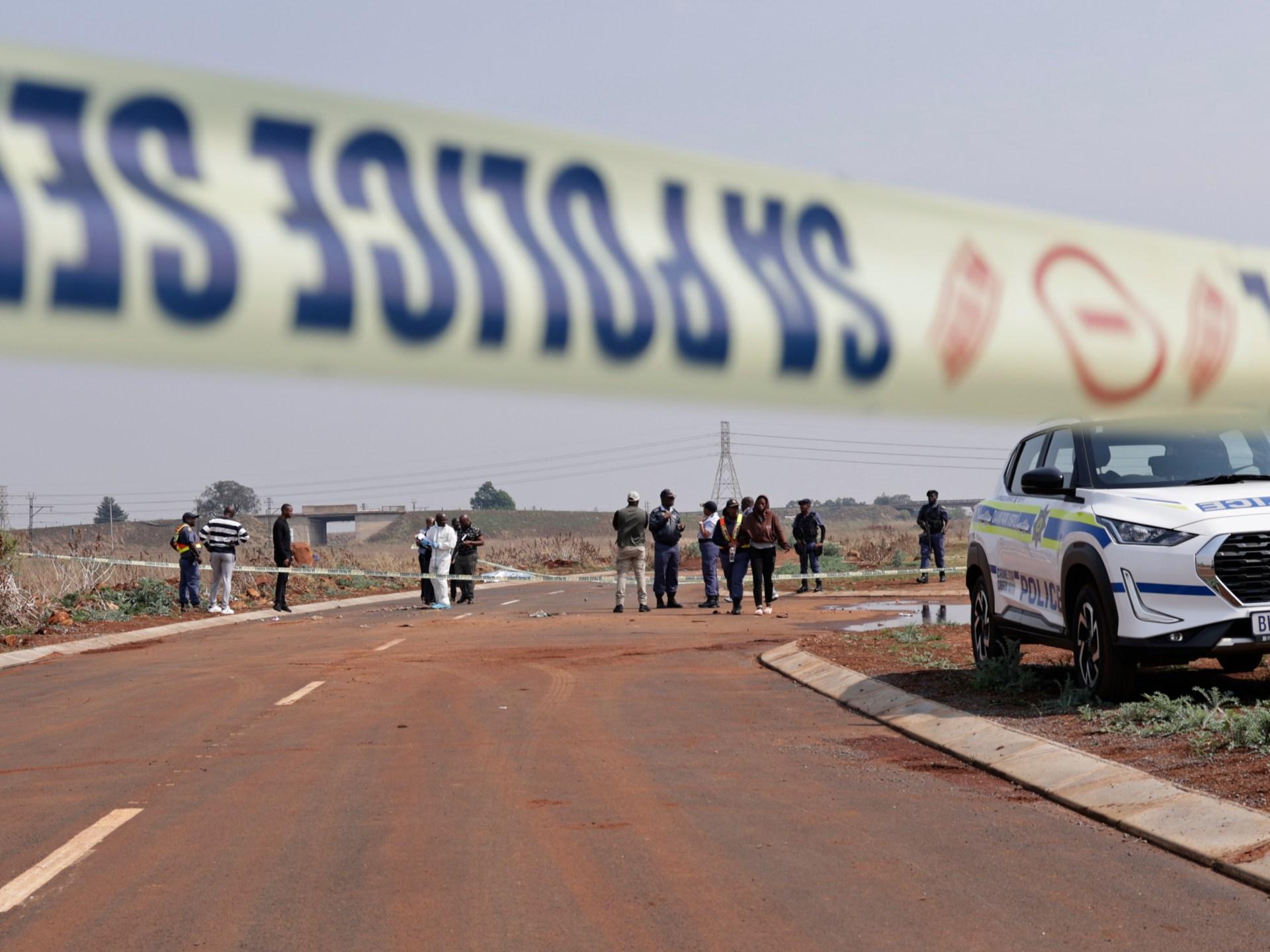
Police in South Africa announced the discovery of a third female body in the Ekurulheleni area east of the commercial capital Johannesburg, raising the total number of female bodies found since mid-July to 11. The new body was spotted in an open field around local noon (10:00 AM Greenwich Mean Time) by a security company vehicle conducting patrols in the area and immediately alerted the police.
Police spokesperson Brigadier Brenda Mordyili stated that details regarding the victim's identity, age, and cause of death were not available immediately upon discovery of the body, while KwaZulu-Natal Police Service Commissioner Tommy Botha indicated that the body found on Saturday appeared to have been killed with stones, though an autopsy will determine the official cause of death.
In a related development, President Cyril Ramaphosa acknowledged during his campaign for local elections that he had heard about the discovery of the tenth female victim's body in Tembisa, adding that this situation saddens everyone and reflects the shame of men in South Africa who continue to kill their country's beautiful women.
Statistics indicate that South Africa is among the countries recording the highest global rates of female killings, with 15 women killed daily, while a man linked to one of the crimes was arrested, bringing the number of detainees involved in the killing spree to four people. The new discoveries have also raised community concerns about the possibility of the same killer or killers being involved in these successive incidents that share some characteristics, despite no conclusive evidence linking them to the same individual or group.
The woman whose body was found on September 17 has been charged with murder, and it is suspected that her death may be related to a relationship dispute; however, Botha confirmed that investigations suggest this case was isolated, although there are similarities between some other crimes.
Analysis & context
Analysis & Context
From an analytical perspective, this worrying rise in the number of bodies scattered around Johannesburg represents a serious consequence of the structural violence crisis that South Africa has been suffering from for decades. Statistics show that the area surrounding Johannesburg is witnessing an unprecedented frequency of these incidents, with three bodies found in just two months in an area covering 6 square kilometers, and the number reaching six bodies in ten days during the current month.
In a broader context, South Africa faces a global challenge related to female homicide rates (femicide), where it tops the global list, making this issue a top political and security priority. While police confirm that some cases may be isolated, the similarity in how bodies are found and their occurrence in nearby areas raises questions about the existence of an organized criminal network or an unidentified serial killer.
President Ramaphosa's intervention and his public comments are part of political efforts aimed at addressing this phenomenon, especially with local elections approaching, which could be affected by the country's security reputation. Additionally, the arrest of four people in the course of investigations highlights the complexity of organized crime files and domestic violence that sometimes turns into mass or serial killings.
Finally, the lack of immediate details about the identity of the latest victim and the cause of her death reflects the gap between the speed of body discovery and the availability of sufficient evidence for a fair trial, which remains a major challenge for the country's justice system.