Sourced fact
The News
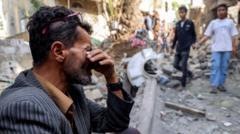
The Yemeni city of Taiz, the third largest in the country, has been under siege by Houthi militias for a full month, isolating its inhabitants—numbering between 600,000 and 1 million—from the outside world. The city faces a severe shortage of food, medicine, and fuel, with prices for essential goods such as rice, sugar, and cooking oil doubling or tripling. Residents are living in deep fear and anxiety as schools and restaurants have closed, and dangerous waste has accumulated within neighborhoods due to an inability to dispose of it through safe burning methods.
Local reports indicate that 148 civilians have been killed since last August due to Houthi attacks, while doctors in hospitals face a critical lack of medical supplies and sterilization fluids that could run out within the next two weeks. A trauma doctor named Yasser stated that the emergency room is rushing to treat injured patients who arrive exhausted after hours of walking, noting that many are children killed or wounded by Houthi sniper fire targeting heads and chests.
In an attempt to justify the situation, Houthi leader Abdul Malik al-Houthi denied that Taiz was under siege, claiming supply routes remain open; however, the government, humanitarian agencies, and the United Nations refute this, confirming the continuation of an effective blockade. Nabil Shamsan, governor of Taiz, explained that the city is losing its population daily not only due to direct shelling but also because of food and income shortages leading to deaths, asserting that the Houthis aim to change the nature of the Sunni-majority city and transform it into a zone governed by their strict religious ideology.
Residents are forced to live in a constant state of fear as forces surrounding them from hills around the city conduct mountain warfare using snipers, missiles, and drones. A young woman named Ashwaq described the situation as resembling a giant prison, stating that she hides her fear of noise from her child to avoid panic, despite his awareness of the war reality in which most of his life has been spent.
Residents, local opposition groups, and government-allied forces are trying to defend the city against rapid Houthi advances that expanded after a four-year ceasefire. Shamsan indicated that the Houthis aspire to impose their ideology on a city that has always been a cultural center and resistant stronghold, but he believes they will not win until all inhabitants die.
Analysis & context
Analysis & Context
Analytically, Taiz's location is strategic as a gateway to Aden and southern Yemen, making it a main frontline in the Yemeni civil war which has entered a new phase of escalation following a four-year ceasefire. Reports reveal that the conflict has transformed into a direct threat to regional stability through Houthi attacks supported by Iran on the Kingdom of Saudi Arabia using missiles and drones.
In the broader context, inhabitants face a compounded humanitarian crisis beyond military shelling, including a lack of essential supplies such as water, food, and medicine, which exacerbates malnutrition rates and infant mortality. The city governor noted that the Houthis aim to return the city "to the dark ages" by imposing their religious ideology on a society known for freedom, political pluralism, and culture.
The role of civilians in defending their city using light weapons and hurried training highlights the magnitude of the onslaught facing the weakened and fractured government army despite Saudi support and air strikes. Additionally, the closure of 120 health centers and the loss of 70% of hospital capacity illustrates the extent to which healthcare infrastructure has deteriorated in the besieged area.