Sourced fact
The News
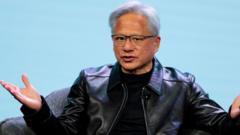
The state of California has issued an investigative subpoena to NVIDIA for its artificial intelligence chip design following a scandal that led to the resignation of CEO Jensen Huang, according to a report published by BBC News. State Attorney General Rob Bonta stated that the investigation aims to determine whether the company's or the individual's actions allowed China to obtain advanced chips or sensitive information, noting that this could violate state laws if investors and the public were misled.
Bonta clarified on Thursday that the situation facing the company is complex due to its international nature, but he emphasized a clear principle of securities law: companies are not permitted to mislead their investors. NVIDIA's stock has fallen by 22% since The New York Times published details of Huang's external relationship in late November.
Reports revealed Huang's relationship with an outsider, a woman suspected of being a Chinese spy working at Megaspeed, prompting some members of the U.S. Congress to request that the Department of Commerce investigate whether NVIDIA transferred chips to China. Megaspeed denied these allegations, stating it was aware of reports containing claims about its work and supply chain but that they were not supported by credible evidence.
Additionally, last week, NVIDIA Chairman Harvey Jones announced that the company does not plan to rehire Huang after he stated he would oversee his return, while some tech leaders like Elon Musk called for his return. Huang left the company a week ago after admitting to connections with extramarital relationships involving subordinates.
Analysis & context
Analysis & Context
From an analytical perspective, this move by California is part of an escalating wave of security and economic scrutiny on major American technology companies dealing with sensitive markets such as China. This context demonstrates increasing geopolitical tensions between the United States and China regarding the digital arms race, where Western governments are seeking to prevent the transfer of advanced technologies that could be used for military or intelligence purposes.
In the broader context, the "NVIDIA" scandal reveals a dangerous intersection between the personal affairs of executive leaders and global national security, where private relationships have become a potential cybersecurity issue. This overlap highlights how internal scandals are being transformed into major international files affecting global supply chains and restricting the cross-border movement of sensitive goods and technologies.
Furthermore, the reaction from the U.S. Congress and California's judiciary reflects a synchronized move by different levels of the American government to suppress any loopholes that might allow biotechnology to leak to strategic competitors or untrusted entities.