Sourced fact
The News
On Friday, within the framework of a high-level meeting held at United Nations Headquarters in New York, South Africa and Malaysia led a group of 40 countries to explore ways to strengthen the enforcement of international law. The gathering brought together foreign ministers, justice ministers, and senior diplomats from participating nations to discuss how to strengthen implementation mechanisms.
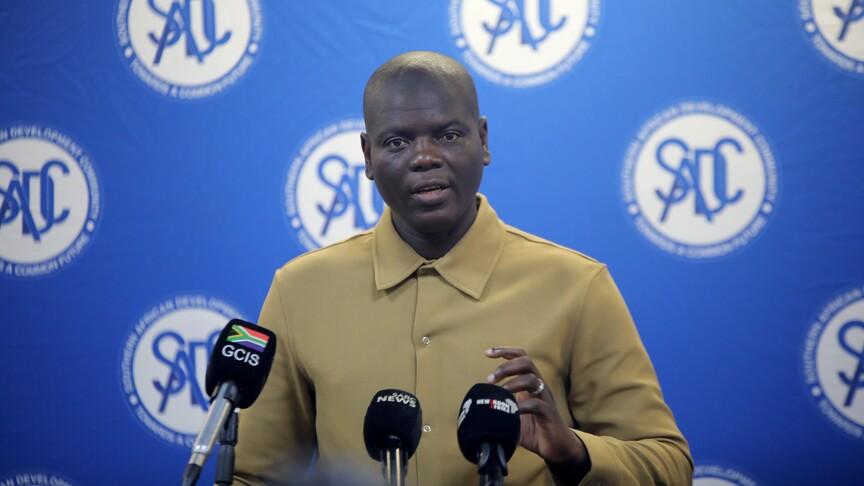
In a joint statement, Ronald Lamola, Minister of International Relations of South Africa, and Mohamed Hassan, Foreign Minister of Malaysia, expressed their belief that the authority of international law does not stem merely from its declaration but from its actual enforcement. Both parties emphasized the necessity of transforming the international system to reflect the principle of sovereign equality among states.
The participants also proposed creating a new mechanism at the United Nations, inspired by the 1962 Anti-Apartheid Committee, to monitor compliance with international law. Discussions focused on three main axes: transitioning from complicity in violations to adherence to existing legal obligations; and moving from impunity to accountability for those who obstruct international courts.
The statement underscored that the occupied Palestinian territories, including East Jerusalem, represent an urgent test for the multilateral system, as violations have continued despite the advisory opinion of the International Court of Justice in July 2024 and the subsequent General Assembly resolution. Countries were also called upon to take coordinated actions to protect the International Criminal Court (ICC) and its judges and staff from sanctions and harassment.
Analysis & context
Analysis & Context
From an analytical perspective, this alliance comprising 40 countries represents a strategic shift in the foreign policy of Global South and developing nations, transforming them from mere observers into active players in shaping international law enforcement. This initiative aims to address what participants term "gaps" in the current system that allow for continuous violations without sufficient legal consequences.
In a broader context, the call to establish a new mechanism similar to the Anti-Apartheid Committee reflects countries' desire to restore the effectiveness of international institutions whose efficacy has eroded over recent decades. The focus on "accountability" rather than "impunity" appears to reflect a shift in international discourse toward collective responsibility for protecting human rights and global justice.
The leadership role played by South Africa and Malaysia in this context highlights their commitment to the principles of customary international law and the UN Charter. The joint statement affirms that defending international law is a "shared responsibility," not the exclusive domain of any single state or institution, thereby reinforcing the concept of international solidarity in facing contemporary security and legal challenges.
Finally, referring to the occupied Palestinian territories as an "urgent test" underscores the profound political significance of international issues affecting peoples' rights and global justice. This alliance seems to seek to link legal issues with their humanitarian and ethical dimensions to ensure that international law does not remain merely theoretical texts but becomes a practical tool protecting the vulnerable within the global system.