Sourced fact
The News
Prince Abdulaziz bin Salman, Saudi Arabia's Minister of Energy, has declared a "serious" response to the attacks by Yemen's Houthi movement on airports and oil facilities in the kingdom. At the Wolfsberg Energy Conference in Riyadh, he stated that "recent events are serious, and our response must match."
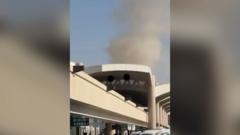
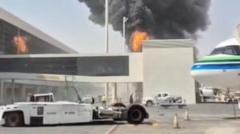
In the same context, two people were killed in a series of attacks on airports in Riyadh and Jeddah in recent days. Saudi authorities reported that a drone attack on King Khalid International Airport in Riyadh killed 13 people, while another person died in an attack on King Abdulaziz International Airport in Jeddah. The Houthi movement claimed responsibility for the attacks, stating that they were in retaliation for Saudi airstrikes on their areas in Yemen.
In response, the Houthi military spokesman, Yahya Sarea, said that his forces launched missiles and drones on airports in Riyadh and Jeddah, as well as oil facilities in the Eastern region, in response to 124 Saudi airstrikes on Yemen in the past 24 hours. Sarea also warned that the Saudi airspace would be used only for flights to Mecca and Medina.
On the other hand, UN Secretary-General Antonio Guterres expressed deep concern over the attacks, stressing that targeting civilians and civilian infrastructure is a violation of international law. US President Donald Trump also mentioned that he would take a decision regarding US participation in Saudi strikes against the Houthis, noting that US forces are already providing intelligence and technical support to the Saudi-led coalition.
These attacks are part of a surge in the conflict in Yemen, which began in 2014 when the Houthis took control of the capital, Sanaa. The fighting escalated in 2015 after the Saudi-led coalition intervened to support the Yemeni government. With the breakdown of an unofficial ceasefire that lasted four years in July last year, the Houthi movement has launched repeated attacks on Saudi airports and oil facilities, leading to a rise in global oil prices.
In this context, the Yemeni government announced the start of a new offensive to reclaim areas under Houthi control, while Houthi forces claimed they still control all their territories. However, the Saudi-led coalition continues to bomb areas under Houthi control in Yemen, increasing tensions in the region.
Analysis & context
Analysis & Context
From an analytical perspective, recent attacks on Saudi airports highlight the impact of the Yemen conflict on global energy security. These attacks threaten vital infrastructure in the Kingdom of Saudi Arabia, potentially leading to a rise in global oil prices. The attacks also reflect an increase in the military strength of the Houthis in Yemen, raising concerns about the expansion of their influence in the region.
In a broader context, the conflict in Yemen has persisted since 2014 when the Houthis ousted the Yemeni government in Sanaa. Since then, Saudi Arabia has intervened in the conflict to support the internationally recognized Yemeni government. As attacks continue, it has become clear that a political solution to the conflict in Yemen is more important than ever, requiring the international community to work with all stakeholders to find a peaceful resolution.