Sourced fact
The News
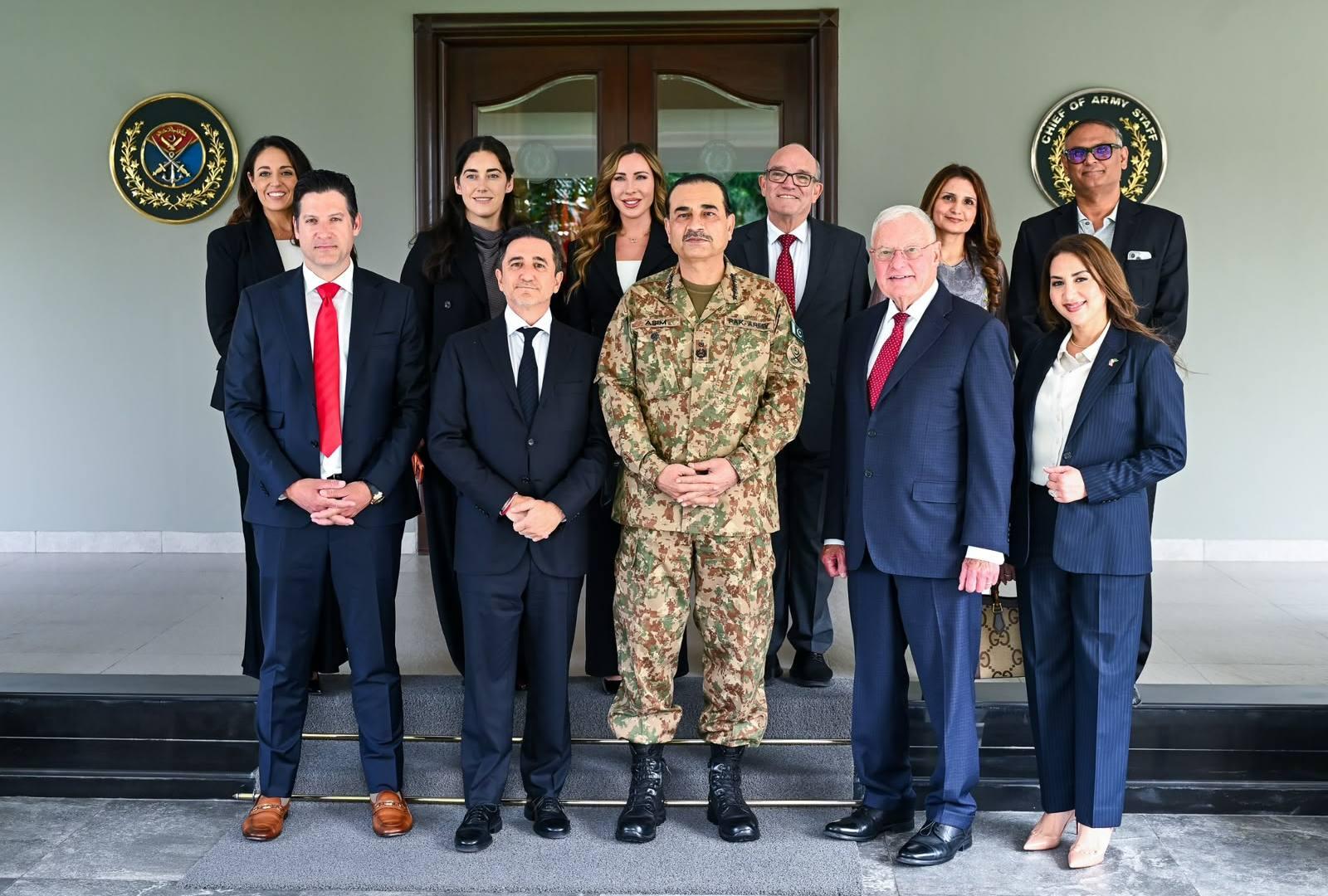
Power Systems International (PSI), a US-based company with investments from the children of former US President Donald Trump, announced a limited agreement with the Pakistani Ministry of Defense to procure unmanned aerial vehicle (UAV) systems. On September 16, the company welcomed a delegation of its leadership at the headquarters of the Pakistani Army in Rawalpindi, led by Chief of Army Staff General Marshal Asim Munir, and signed a Memorandum of Understanding (MoU) with high-ranking Pakistani military officials one day later. Although the contract value and system details remain undisclosed, the agreement has raised significant questions among analysts regarding Pakistan’s motives for shifting to a new firm with Israeli ties that sells its technology to its rival, India.
A statement issued by the company clarifies that the MoU is not a final deal nor does it obligate the purchase of any equipment; rather, it serves as a strategic framework subject to US approvals and local regulations. A company spokesperson confirmed that Trump’s children do not participate in business management or defense relationship structures and hold no governance role, emphasizing that its government relations are built on its own merits. The company also stated it is currently exploring ways to build technology locally within Pakistan in collaboration with the Pakistani Army and Ministry of Defense.
This move is highly controversial given that PSI previously granted an exclusive license to an Indian firm to manufacture and sell "Garden-1" drone components in India, a deal analysts describe as US arms sales to warring nations. Manzur Ahmed, a visiting professor at the Australian National University, noted that the US has long practiced arming conflicting states, citing Washington’s sale of F-16 fighters to multiple countries including Israel and its current supply of F-35 jets to Saudi Arabia, which are used by Israel. A former Pakistani defense analyst suggested that Pakistani military planners were likely aware of India's agreement, arguing that the primary challenge lies with PSI’s management to ensure operational security for both parties is not compromised.
A retired Pakistani military expert highlighted that purchasing military equipment from a single source poses special risks when one rival possesses greater financial and technological control. The company’s Israeli connections also drew analyst attention: co-founder Zeiv Marom is described as a former Israeli Army veteran, while another executive, Justin Ganz, previously worked at Elbit Systems, an Israel-linked US corporation. A retired Pakistani army officer, who requested anonymity, warned that such arrangements carry strategic risks for Pakistan, especially given the existence of a rival with superior financial and technological capabilities.
Analysis & context
Analysis & Context
From an analytical perspective, Pakistan’s decision to engage with a relatively new firm having Israeli background—despite not officially recognizing the State of Israel—presents a major geopolitical challenge. This move contradicts Pakistan’s traditional policies that reject dealings with Israel and accuse it of committing genocide in Gaza, placing Pakistan in an awkward international and regional position.
In a broader context, reports indicate that Power Systems International is integrating its assets with "Aurion Greenway Holdings," a company listed on the US Nasdaq stock exchange, which enhances its global commercial presence despite the ethical and political contradictions surrounding it. This merger may open new horizons for the firm but also complicates the diplomatic situation among the involved nations.
This scenario also underscores the nature of the global defense market, where major corporations compete for contracts from rival countries, often positioning themselves as unwelcome intermediaries in regional conflicts. The greatest challenge rests with the company’s management to ensure it does not compromise the security of either contracting party.
Finally, this news highlights the importance of transparency in international defense deals, where companies must adhere to strict ethical standards preventing them from selling weapons to adversaries or politically opposing states. The absence of such standards could exacerbate regional tensions and undermine trust between countries dealing with the same military supplier.